We acknowledge the Traditional Custodians of the lands and waters through which this journey moves—from the high country of the Byadbo Wilderness in the Snowy Mountains down the Snowy River valley to Orbost and the coastal plains.
We pay our respects to Elders past and present of the Ngarigo, Bidawal, Yuin, and Gunai/Kurnai peoples, whose Country this river flows through and whose connection to these landscapes continues today.
We recognise that the Snowy River is not just a place for recreation or expedition, but a living cultural landscape—shaped, known, and cared for over countless generations. We are grateful to move through this Country with respect, humility, and awareness of its deep and continuing significance.
Dates: 16-24 April 2022
Length: 9 Days
Start: Byadbo Wilderness
Finish: Bete Belong/Orbost
Total Distance: 220 km
Type: Group of 4, self-supported, camping, Grade II-III/P
Level: 2.1m dropping to 1.92m at McKillops Bridge
Pre Trip
In the week leading up to the trip, the river kept rising. What started around 1 metre climbed to 1.4, then 1.8, and eventually pushed past 2 metres. With each update, Justine and Craig kept shifting our put-in further and further upstream, trying to manage the changing conditions and avoid the hardest sections of the Snowy River.
With every rise in level, my nerves increased. I had paddled the McKillops Bridge to Buchan section of the river before, but at this flow it was more than double the volume I had experienced previously, and large sections were completely unfamiliar. It was clearly pushing us beyond our comfort zone—especially without anyone more experienced on the trip to provide guidance on the water.
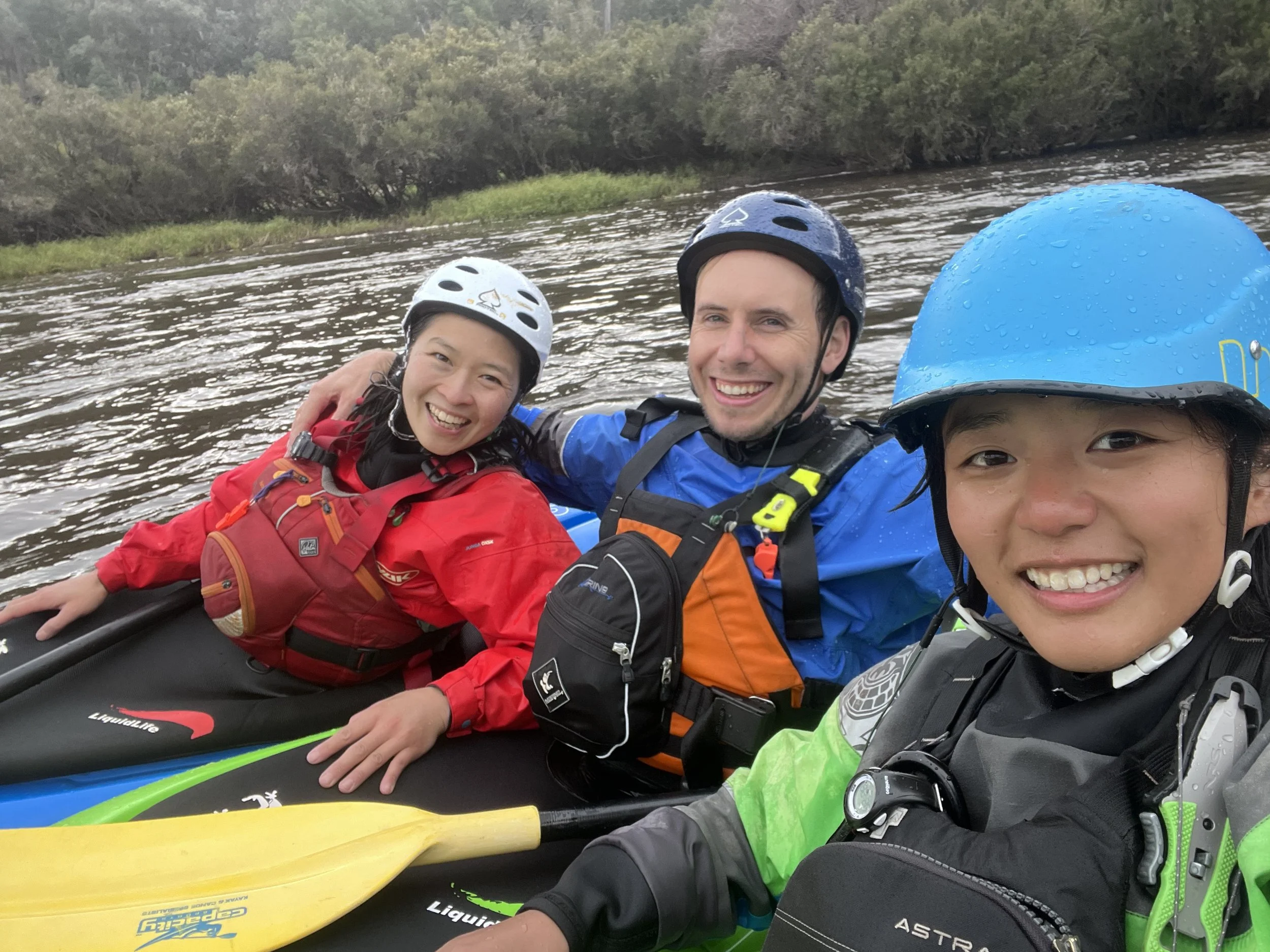
Justine and I were Class III kayakers—comfortable in Grade 3 whitewater, able to read features, pick lines mid-rapid, and roll when things went wrong. Craig was a Class II kayaker without a dependable roll, although he had previously paddled this same river in a packraft at much lower flow during a solo summit-to-sea journey. It was his idea that we should do this trip together.
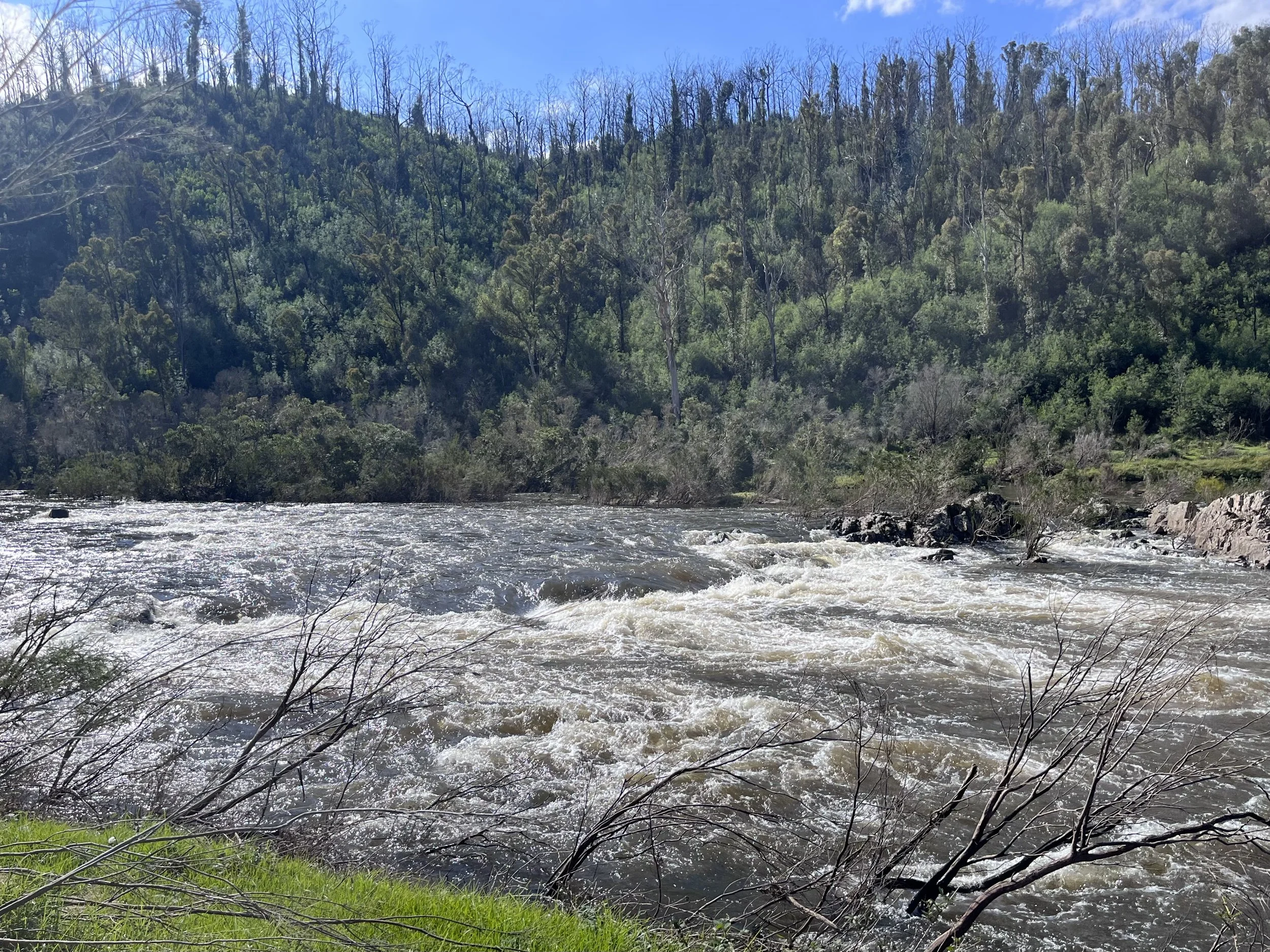
At around 1 metre on the gauge, the Snowy is already a solid Grade 3 river, with a few Grade 4 features and a well-known Grade VI portage section. It’s committing even in normal conditions—remote, powerful, and not to be underestimated. At 2.2 metres, it becomes a very different proposition entirely: more water, less defined features, and far less margin for error.
Still, all of us had experience in outdoor travel and decision-making in remote environments. We understood our strengths, and we were also honest about our limits. Our approach was simple—stay conservative, scout often, and be ready to portage anything that didn’t feel right.
Itinerary
Day 1 Byadbo Wilderness → Snowy Falls Portage Island 4km
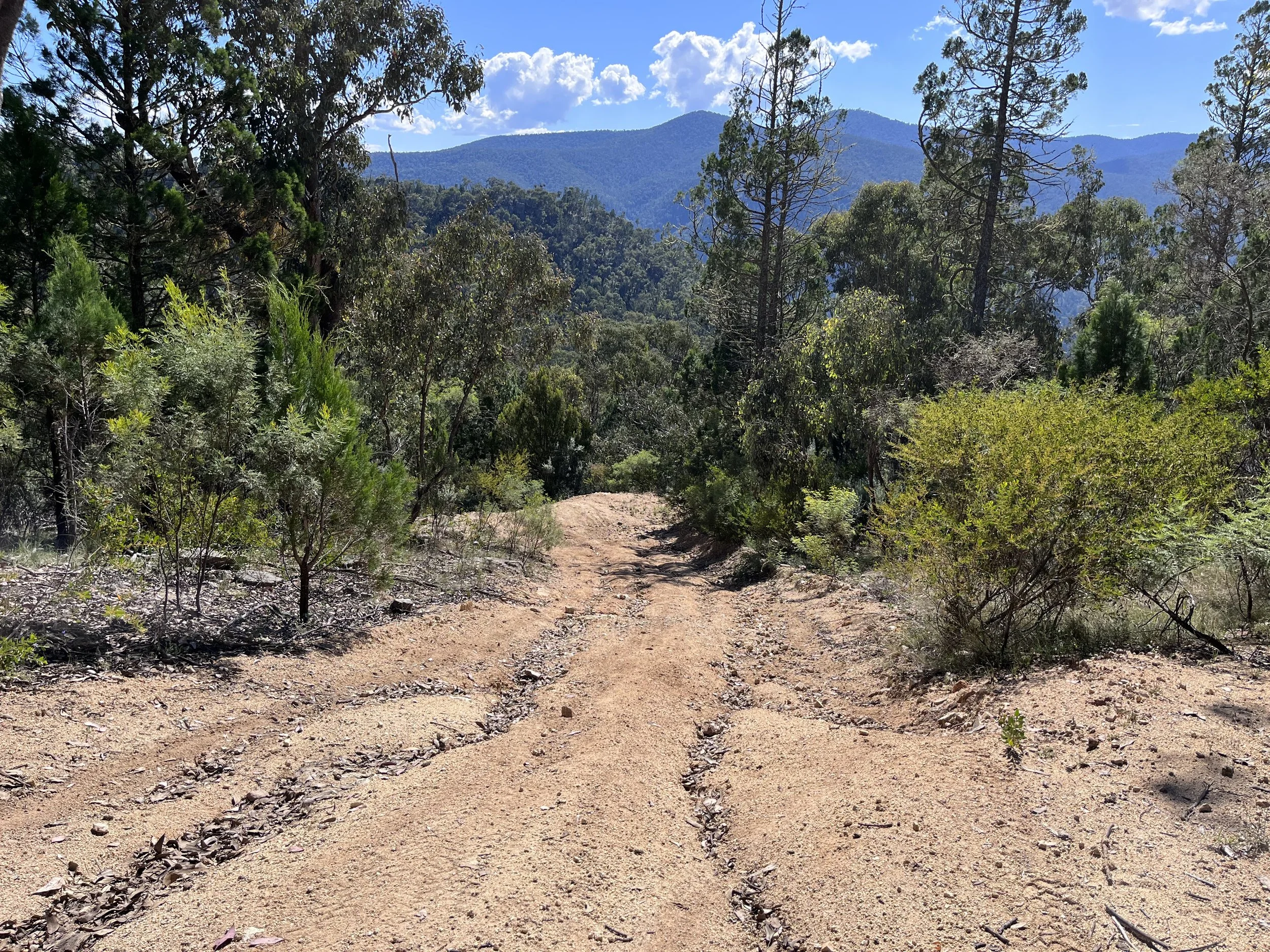
Our adventure began long before the river itself. We loaded up the cars and headed toward the Snowy River, with a long drive still ahead of us. I had left my car back in Orbost with a note for the Police about our trip the day before.. From there, we drove to pick up Craig’s car and sort out the camping arrangements before continuing on. The final stretch to the put-in was a serious 4WD track—rough, steep, and demanding full attention. My heart rate stayed high the whole way down. We had to stop at points to shift gear and even build makeshift log bridges to get through sections of the track.
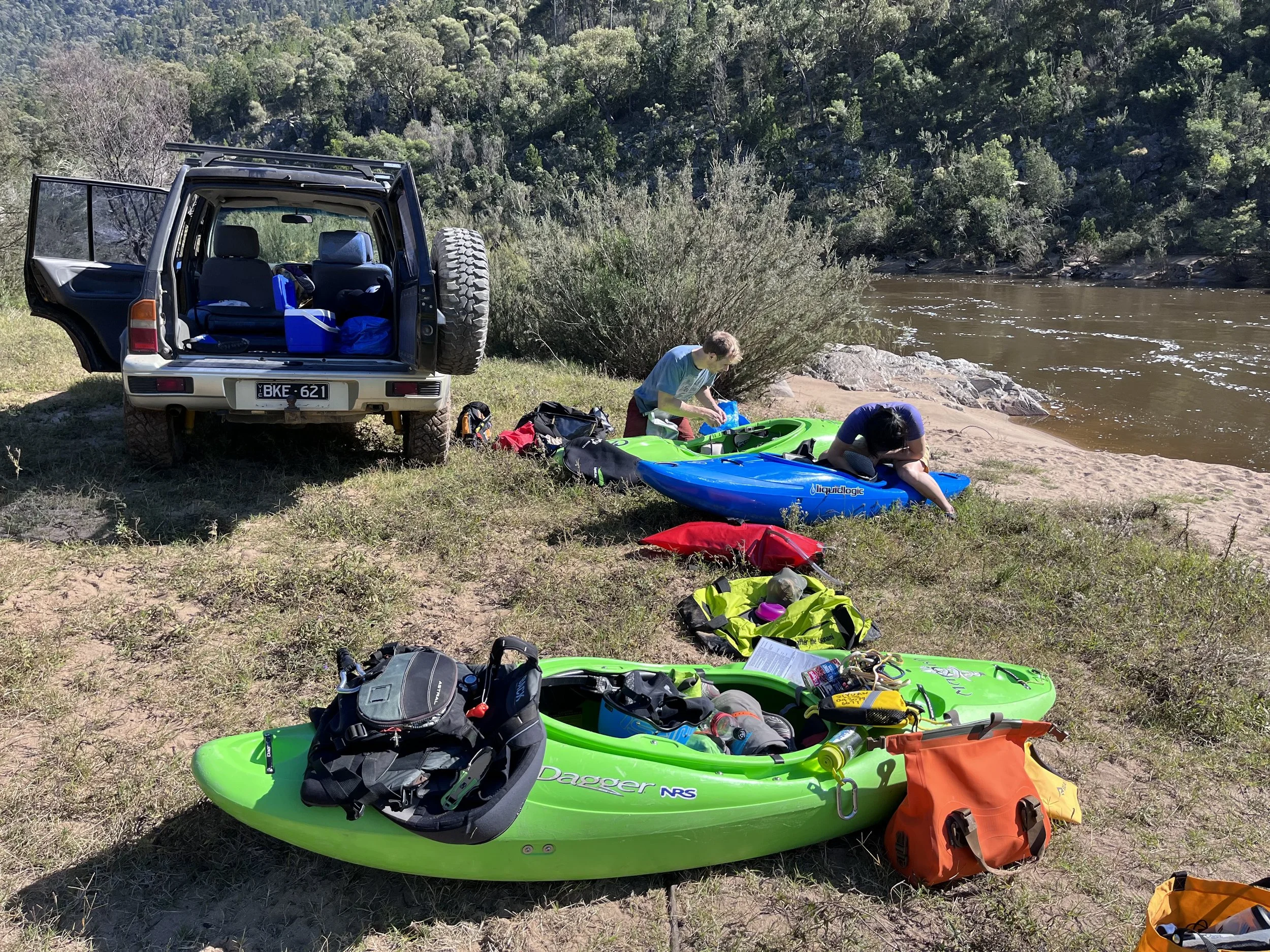
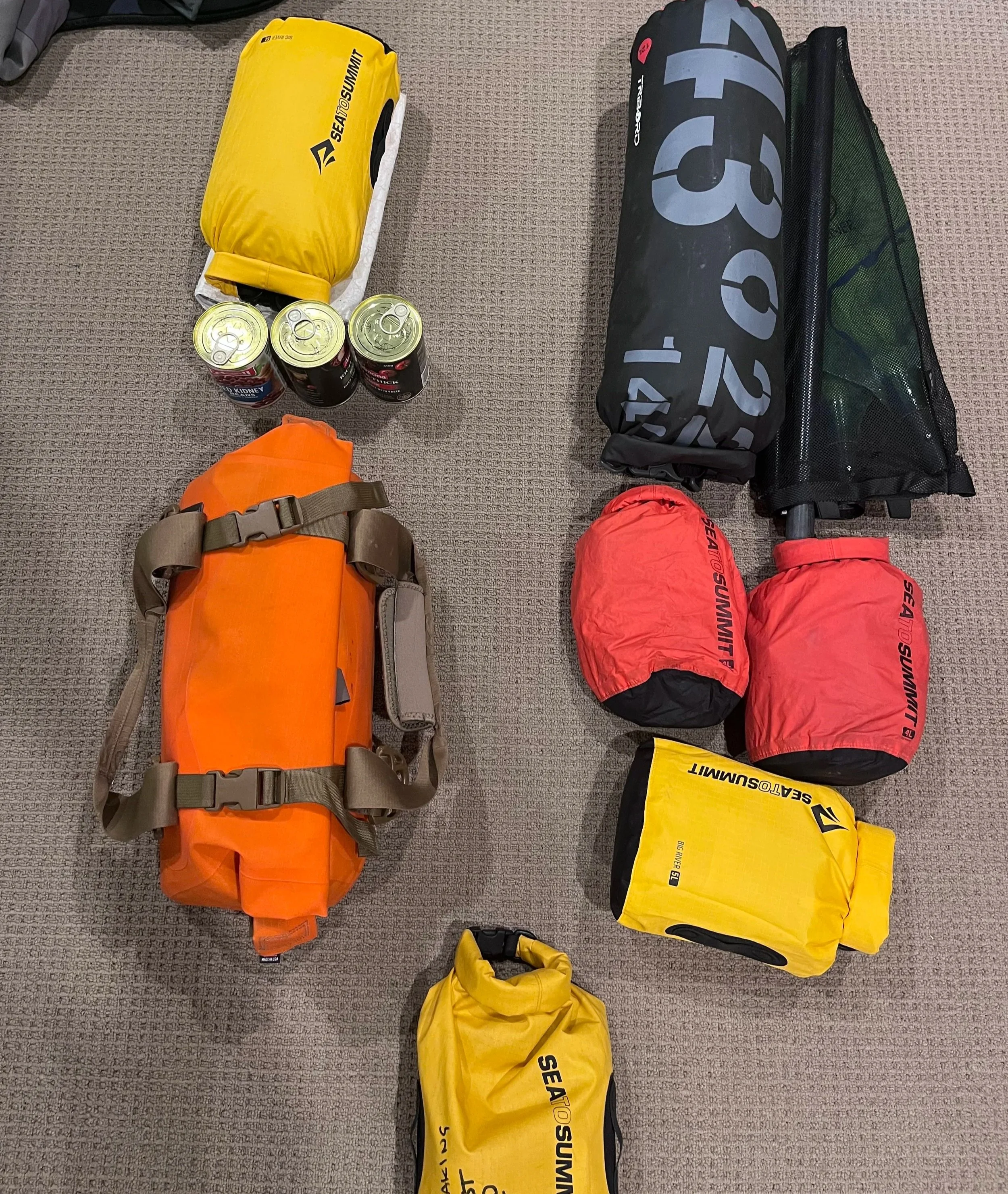
When we finally reached the river, we unloaded everything: kayaks, dry bags, food, camping gear—everything carefully packed and re-packed for whitewater travel. Then we made the drive back up the track to leave one car at the top of the 4WD section, so retrieval at the end of the trip would be possible. Outdoor expeditions are always a kind of Tetris. Sometimes it’s backpacks, sometimes a bike, and this time everything had to fit inside whitewater kayaks. I had done a practice pack at home, so I knew roughly where each dry bag should go to keep the boats balanced and functional on the water.
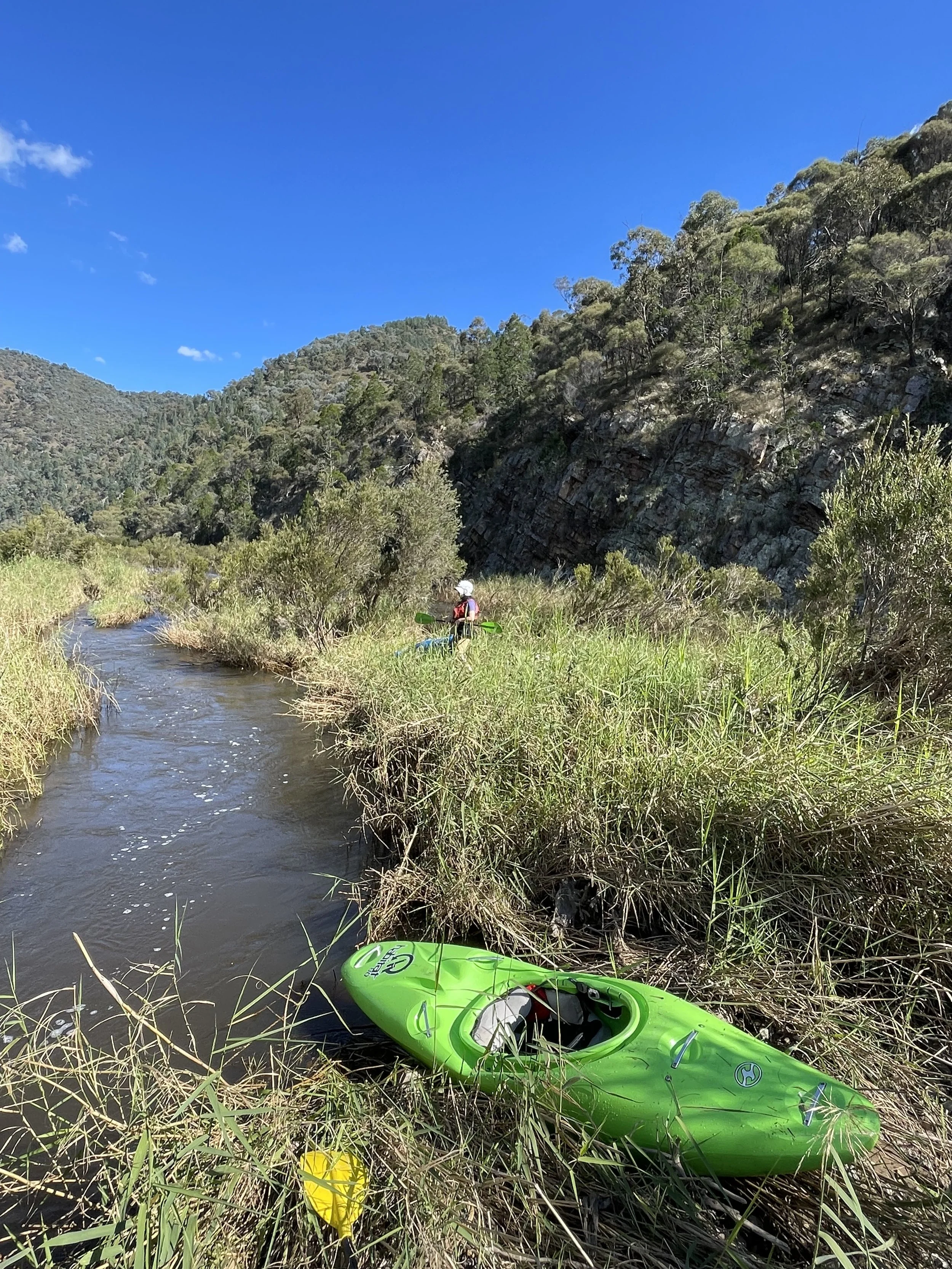
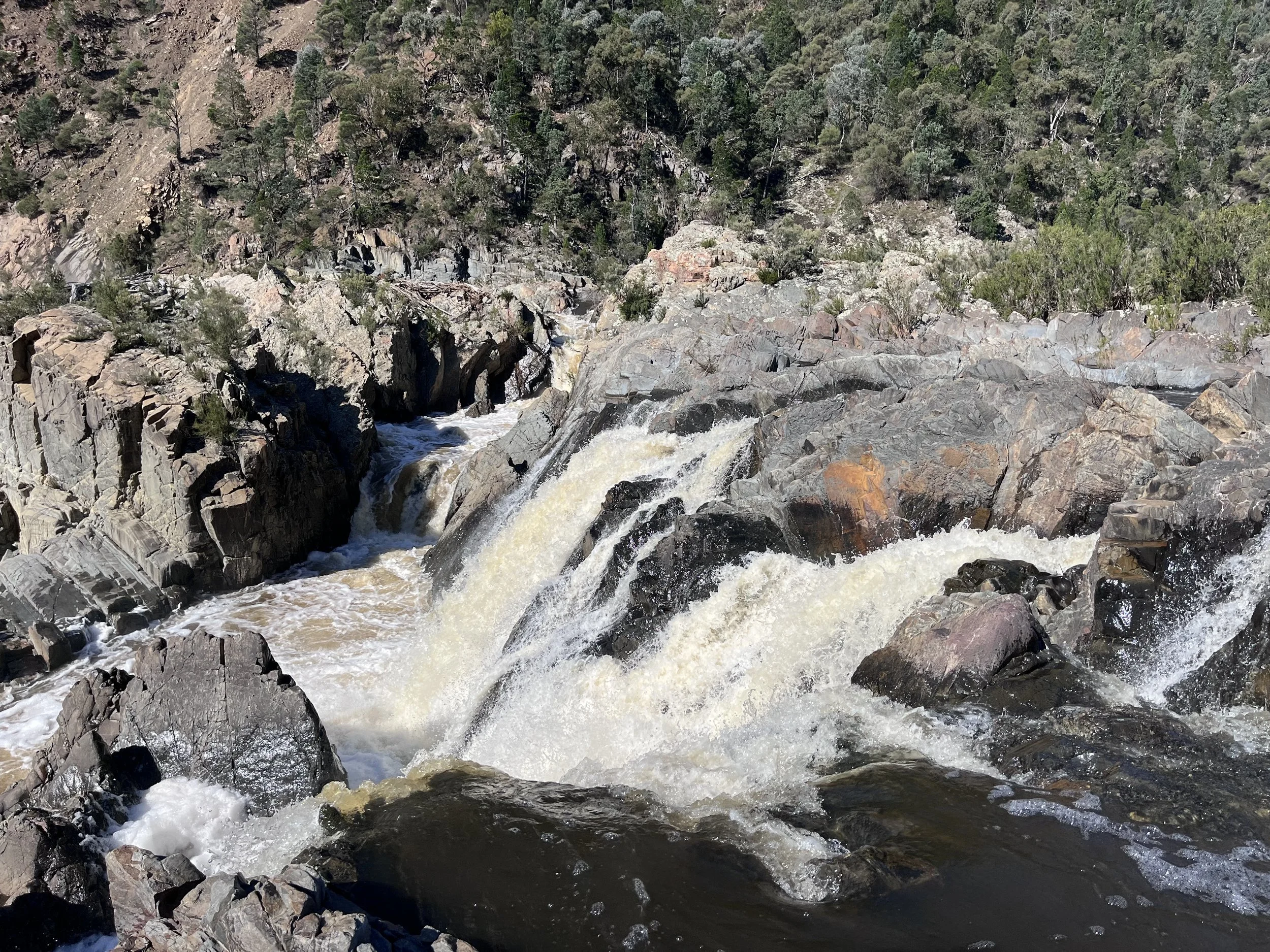
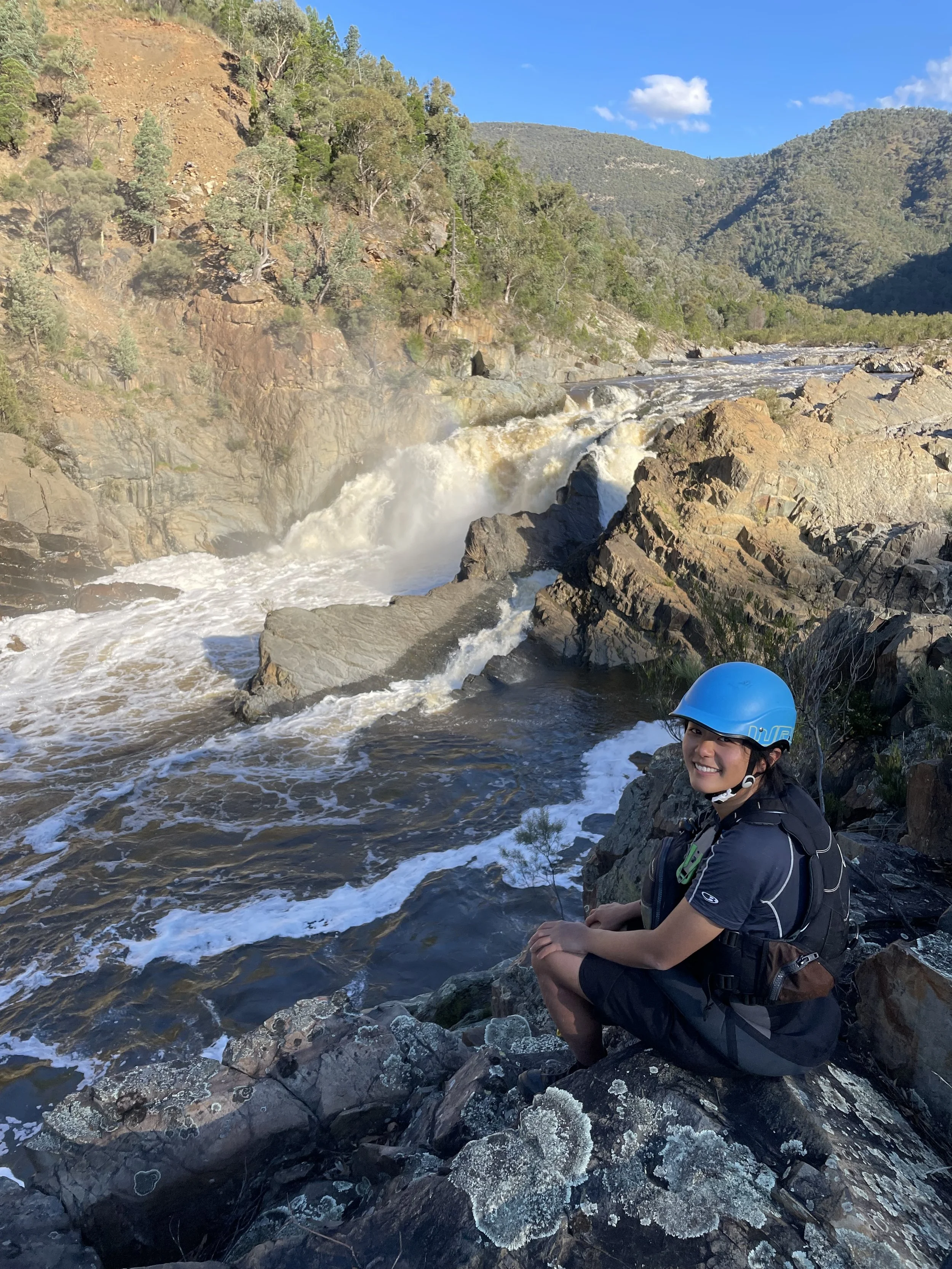
We didn’t make it far on the river that first day—only about 3 km—before reality set in. The Snowy was big, powerful, and intimidating, with a couple of big volume Grade 2 rapids that felt much larger when sitting in a loaded kayak for the first time. The portage took hours, slow and physical, moving gear and boats around obstacles and through difficult terrain.
Eventually, we had to stop and set up a bush camp on a small peninsula because we couldn’t finish the portage before dark. It wasn’t the smooth start we had imagined. The day felt heavy—physically, mentally, emotionally. By the end of Day 1, both Justine and I were exhausted and shaken. There were tears, doubt, and honest questioning of why we choose whitewater kayaking in the first place when it can feel this overwhelming. And yet, even in that uncertainty, we were already in it—the river had us.
Day 2 → Devils Hole creek 16km
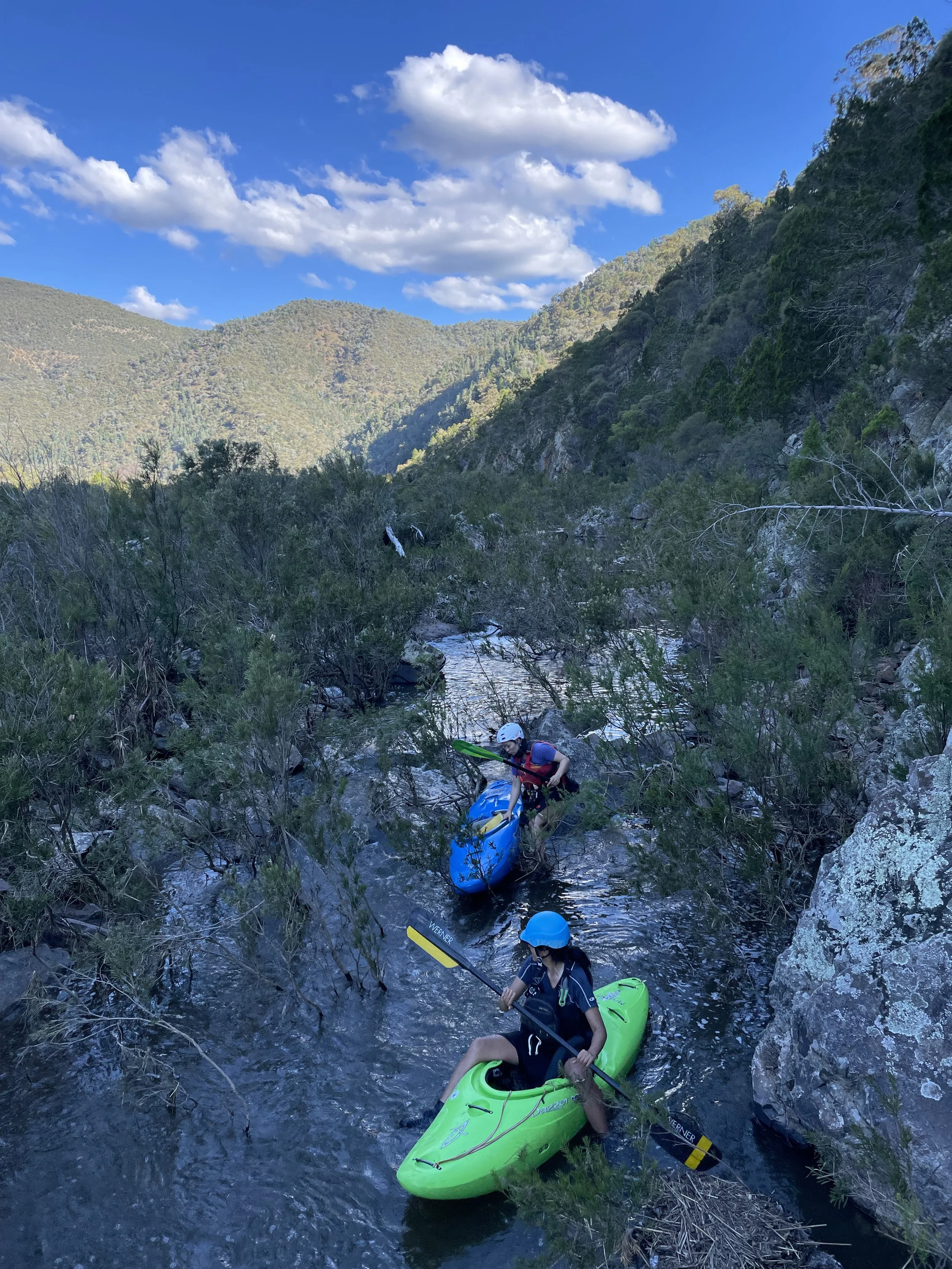
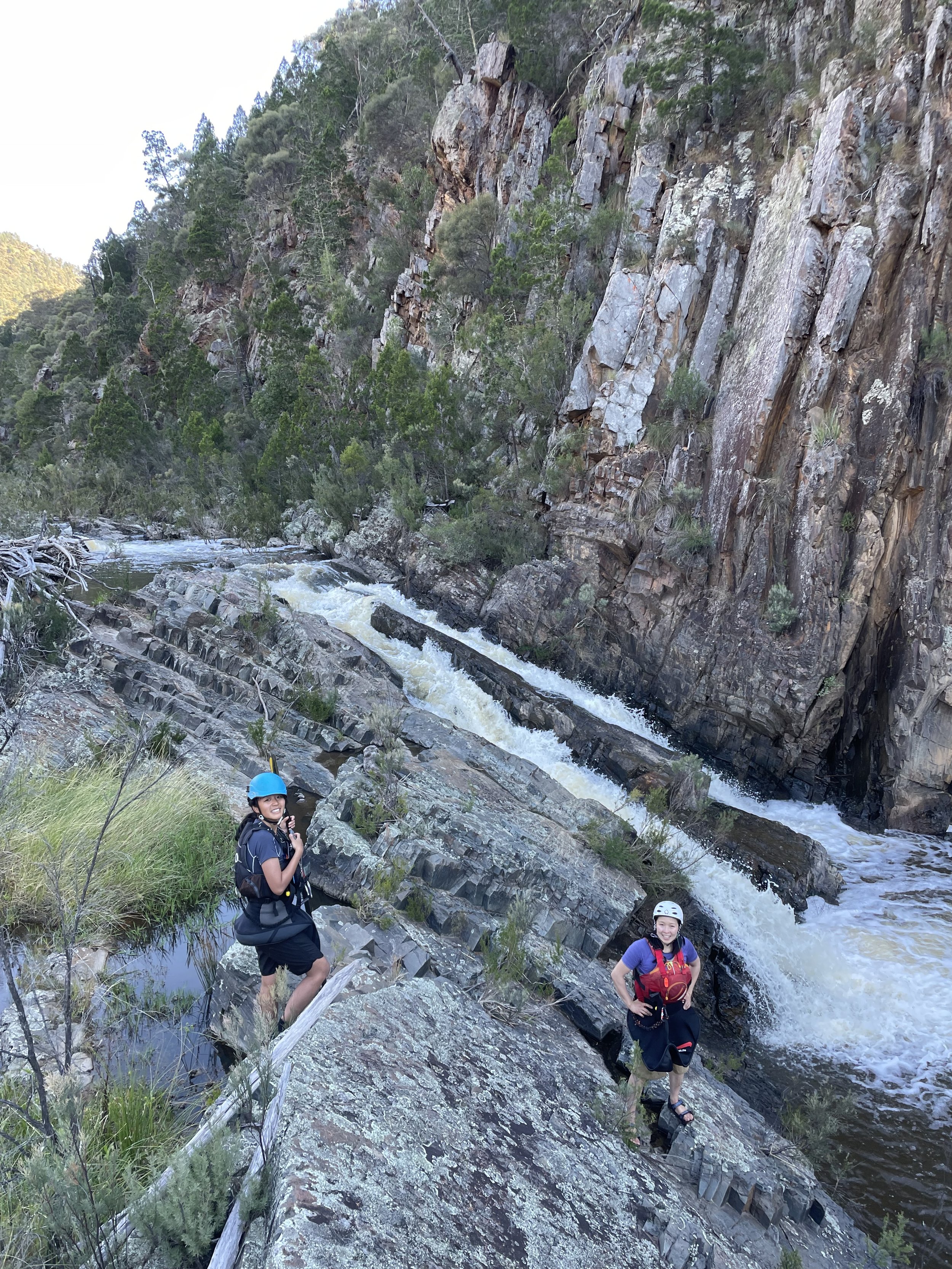
We started by scouting our portage “path” before committing to carrying and dragging gear toward the riverbank. It was slow, technical work through rocks and thick bush, and it took another two hours just to move everything a short distance closer to the water. Putting on at the bottom of a Class VI rapid on the Snowy River gave me an uneasy feeling straight away. Normally, at lower water, this portage takes about an hour and you can lower your kayak back into the river earlier. But at this level, everything was amplified. In total, it took us around six hours just to cover about one kilometre. People often ask me what the hardest hike I’ve ever done is, and I always come back to this portage—dragging 40kg kayaks over rocks and bush-bashing through difficult terrain for what felt like an endless stretch of riverbank.
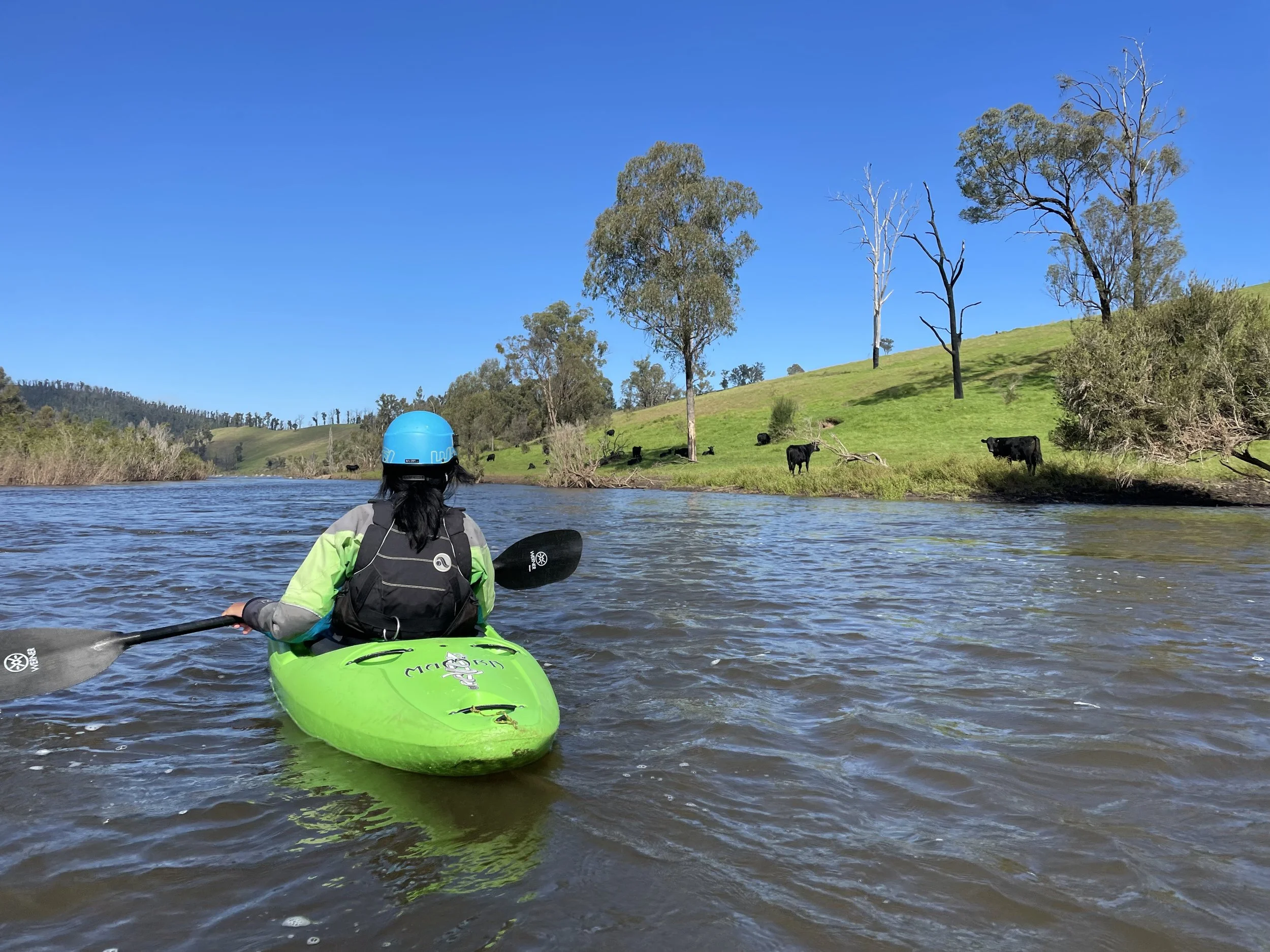
Getting back into our boats felt like a relief, but we were still cautious. The first few rapids came quickly, soon we came across a horizon line with a deep roaring sound underneath it. I pulled into a river left eddy to scout. A long big volumn grade 3 rapid. At that point, nerves were high—Justine and Craig were so nervous they both had to stop for a “nervous poop” before continuing. I picked a line and ran it first. They followed, and it turned out to be great fun. Once through, the river changed character. It opened up, the rapids became more straightforward, and we could finally relax into the flow. We saw brumbies standing along the banks, still and watchful as we passed. Confidence started to build, and we began to “read and run” instead of over-scouting everything.
We camped at the confluence of Devils Hole Creek, which felt like a much better and more peaceful campsite than the night before. Kayaking felt enjoyable again—good weather, big scenery, and the sense that we were finally moving with the river rather than fighting it.
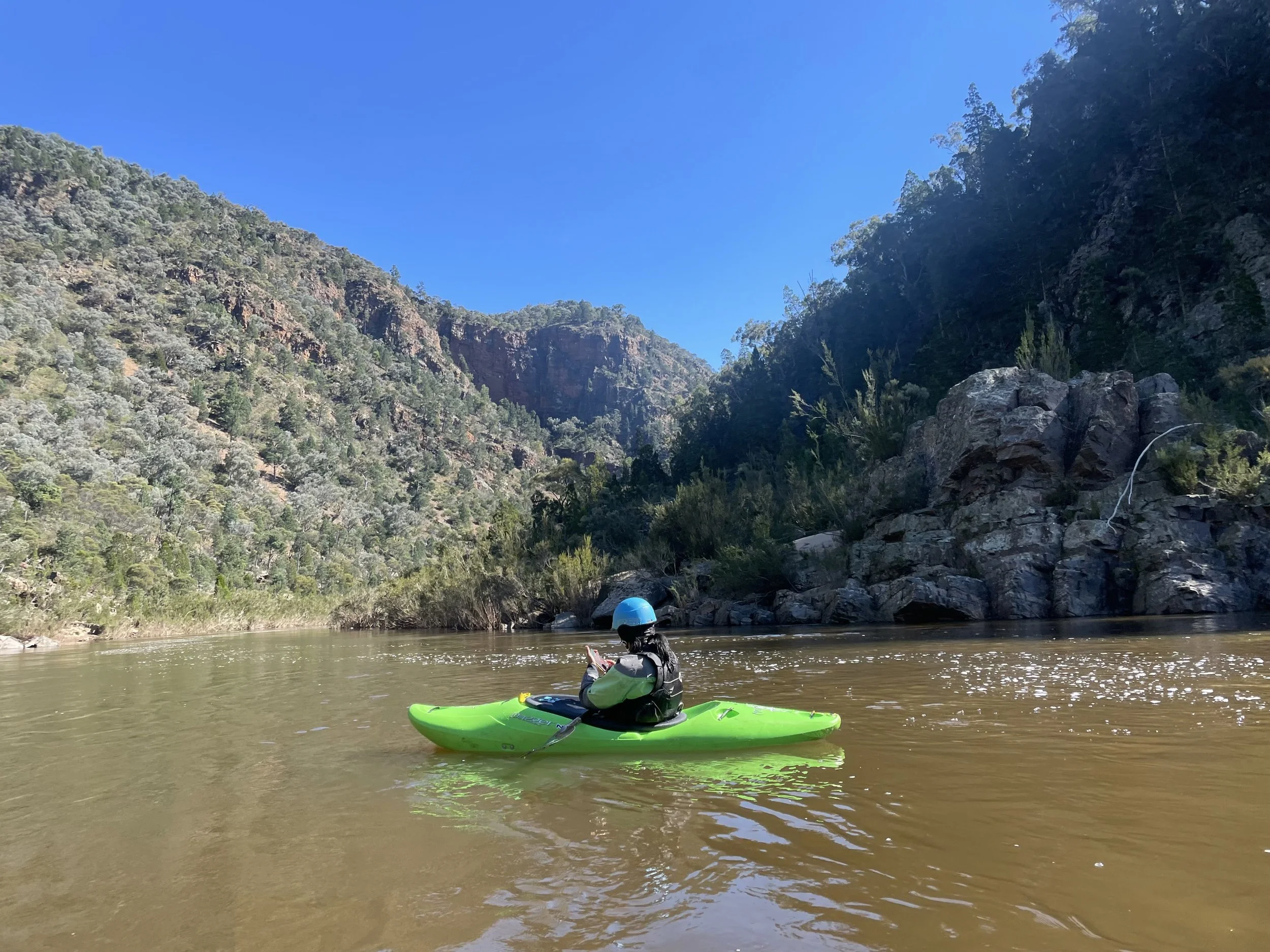
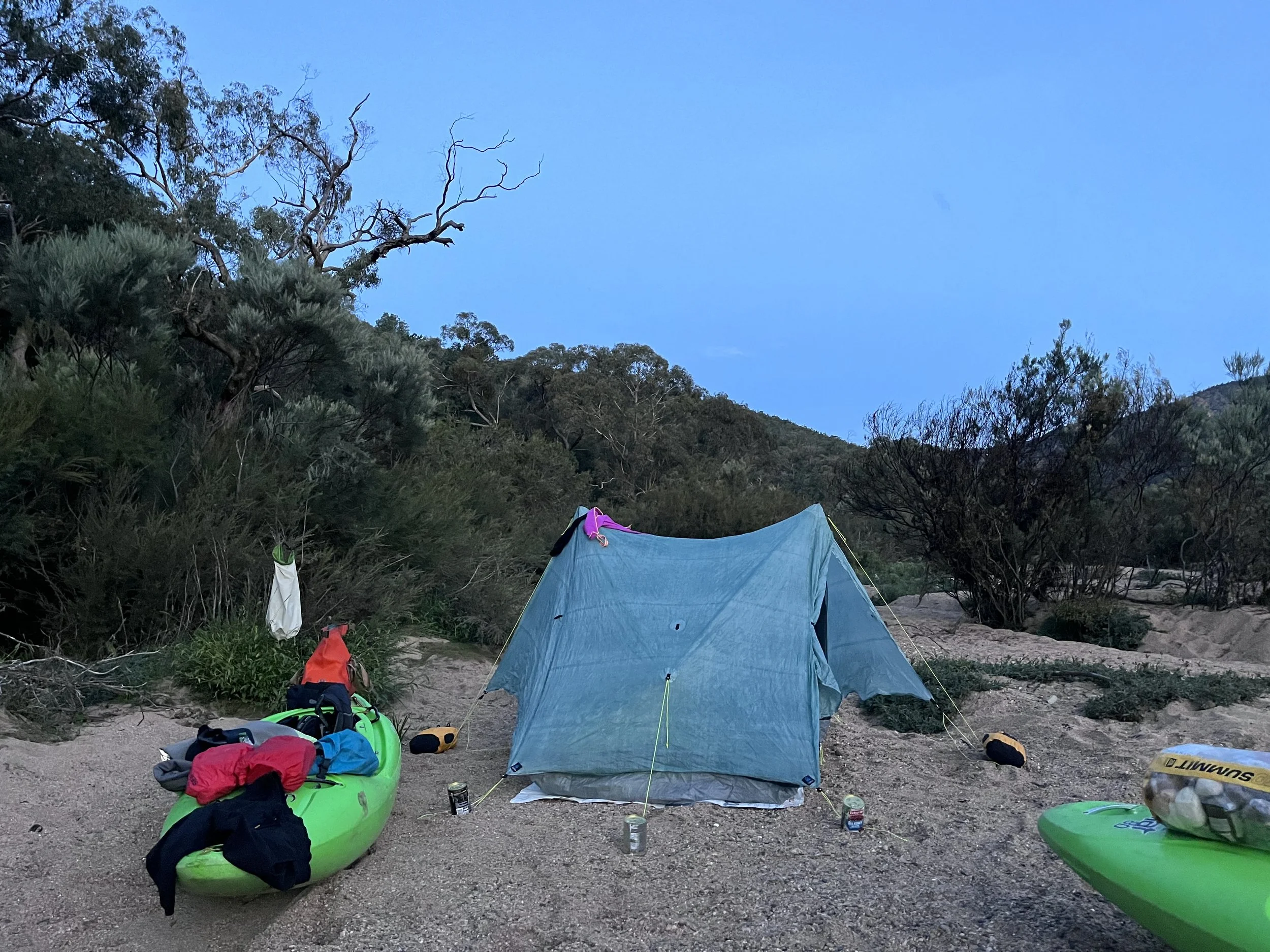
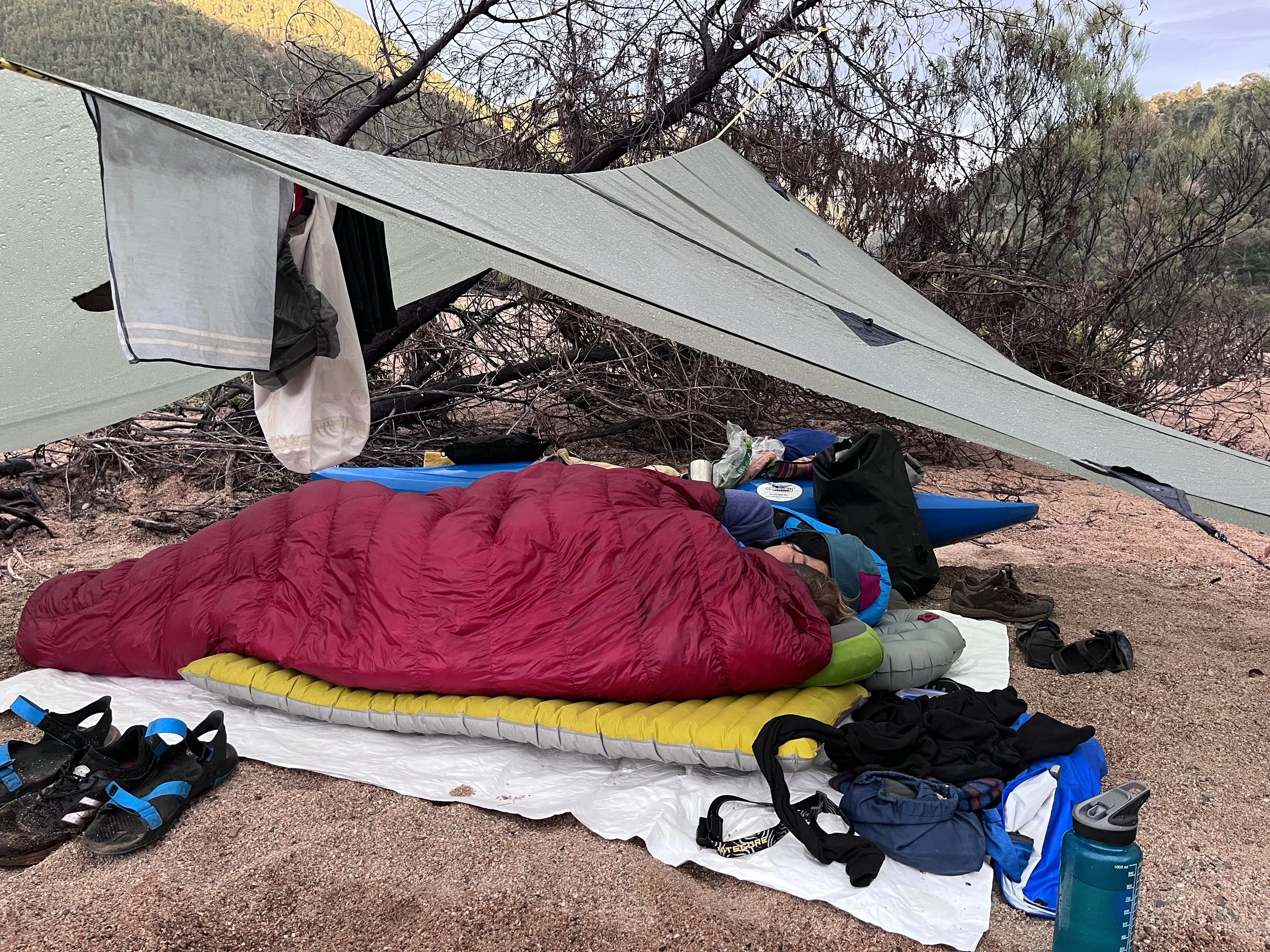
Day 3 → Near Jacob’s River 35km
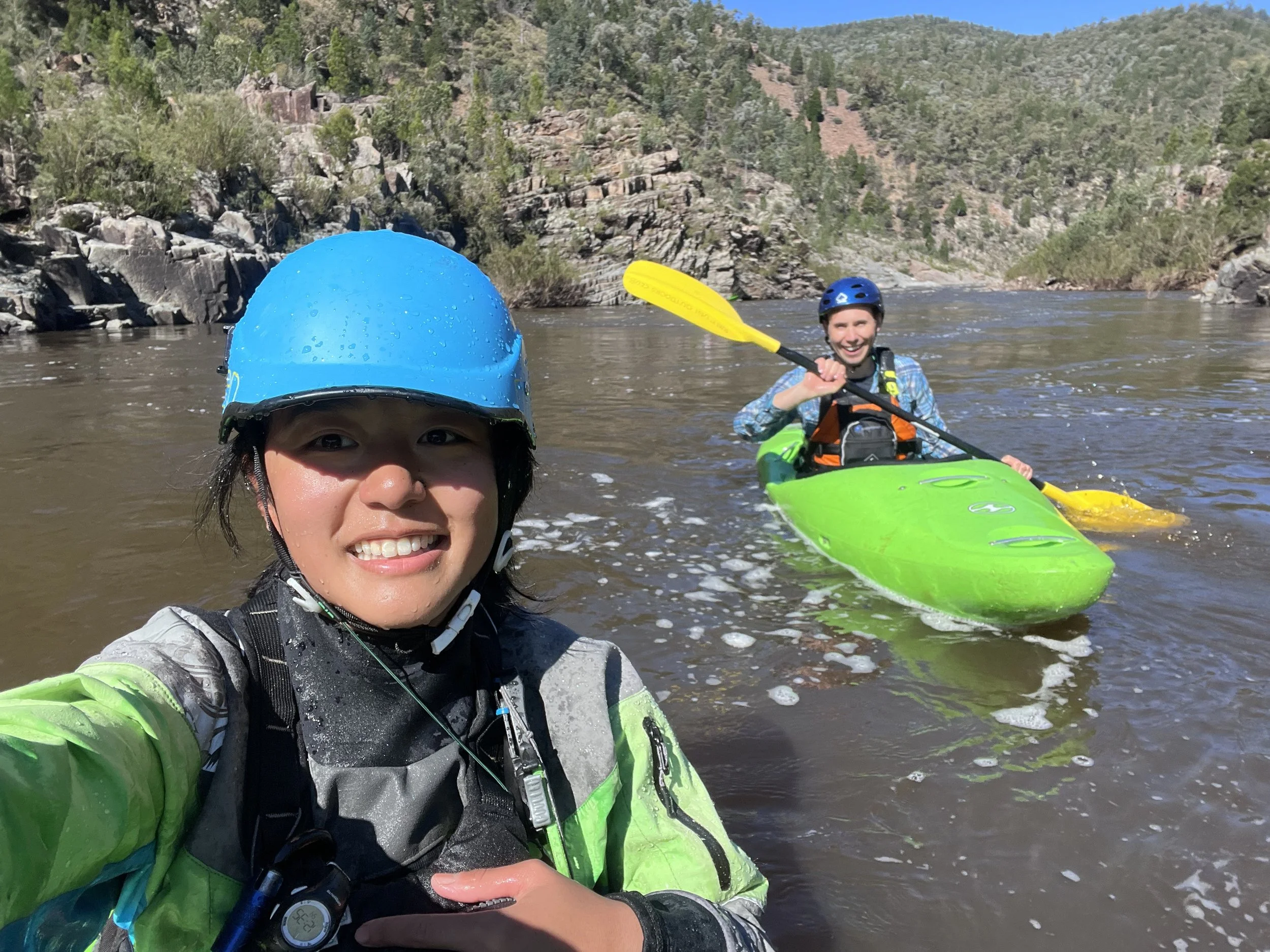
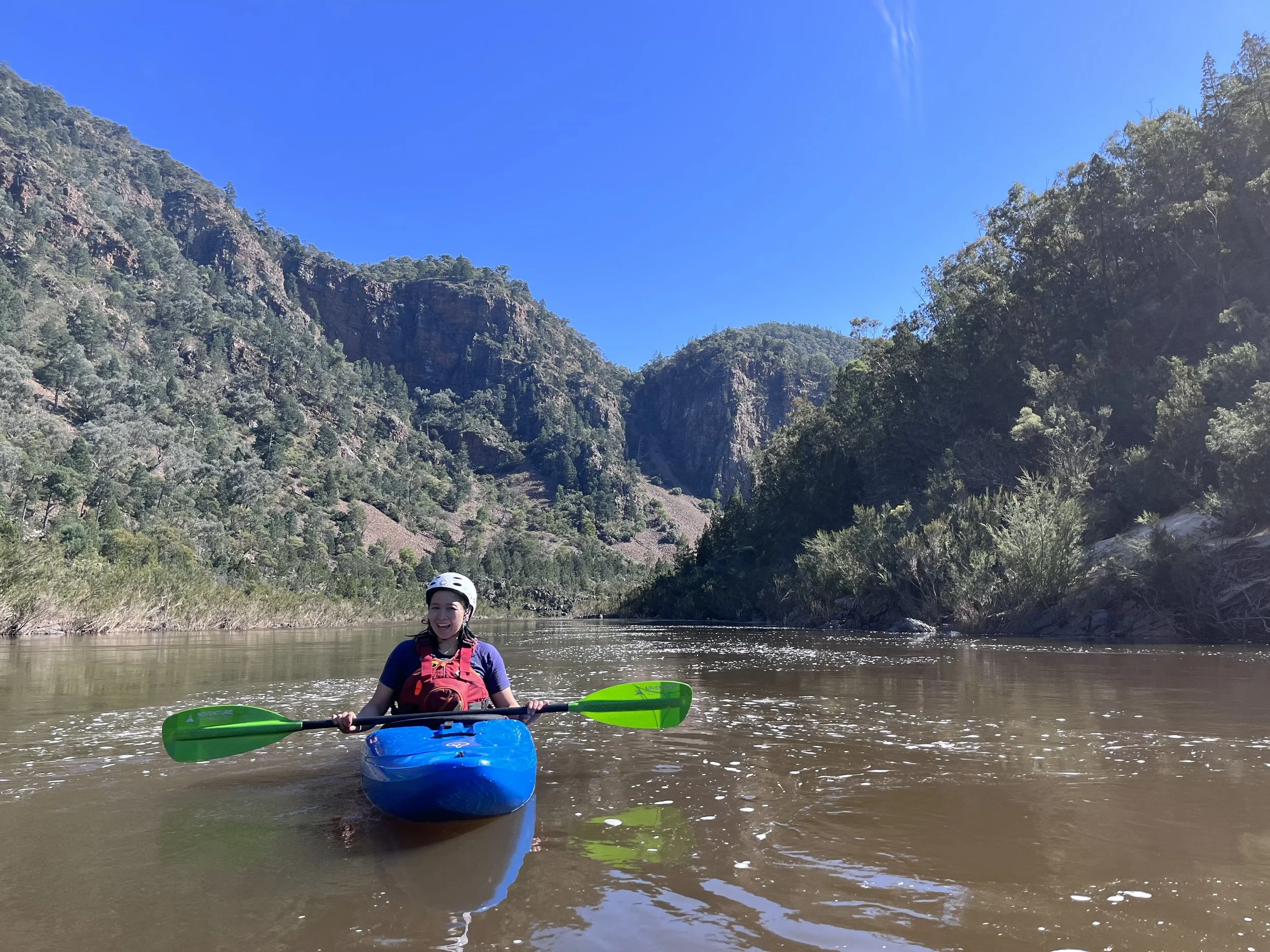
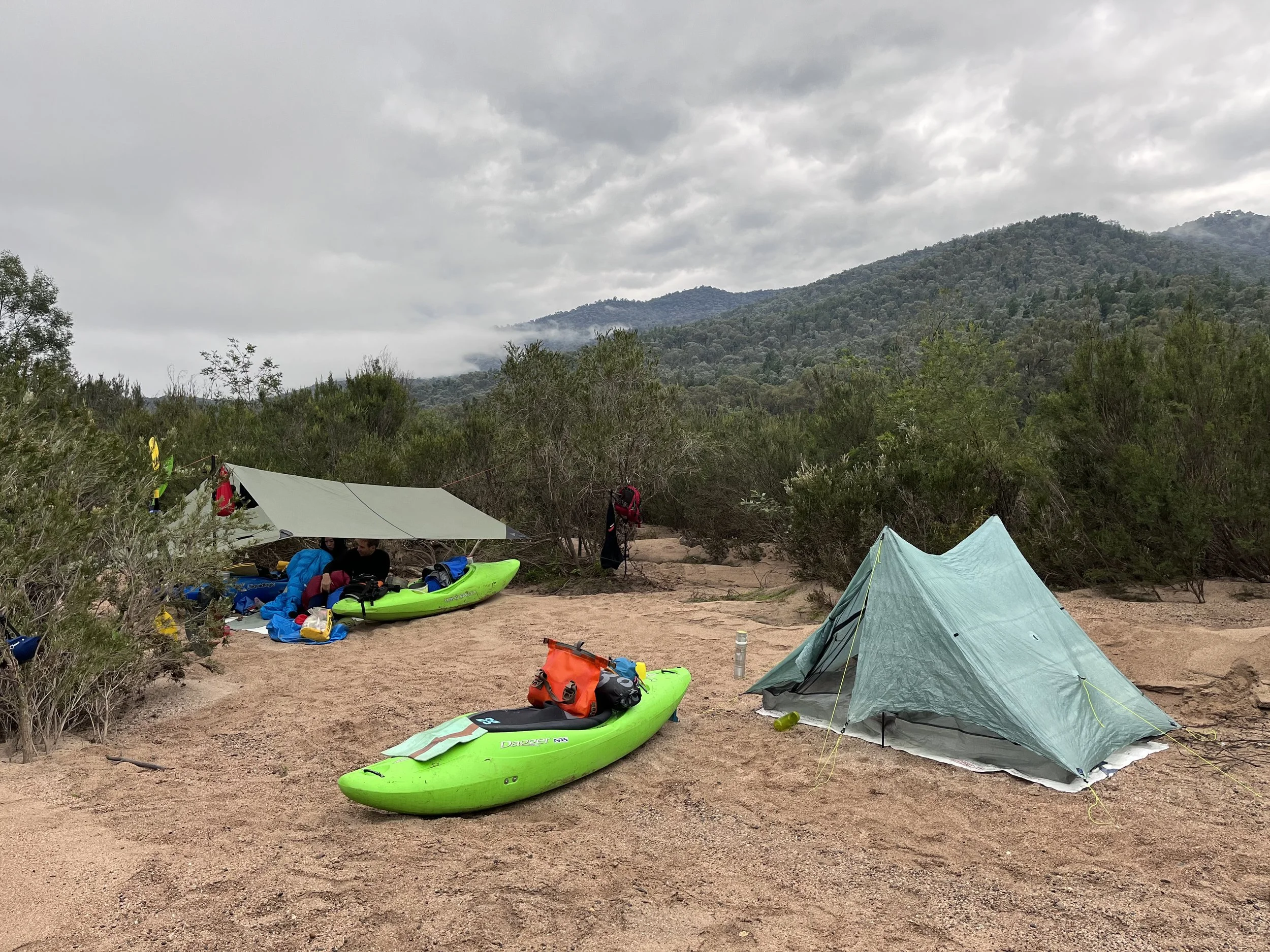
Day 3 felt more relaxed after the intensity of the early sections. The river settled into a rhythm with a few rapids that still lifted the heart rate, but nothing overwhelming. I loved being back in the flow—moving downriver, living out of a kayak, everything pared down to paddling, eating, camping, repeating. Somehow, we ended up on another overnight portage island again. Not planned.
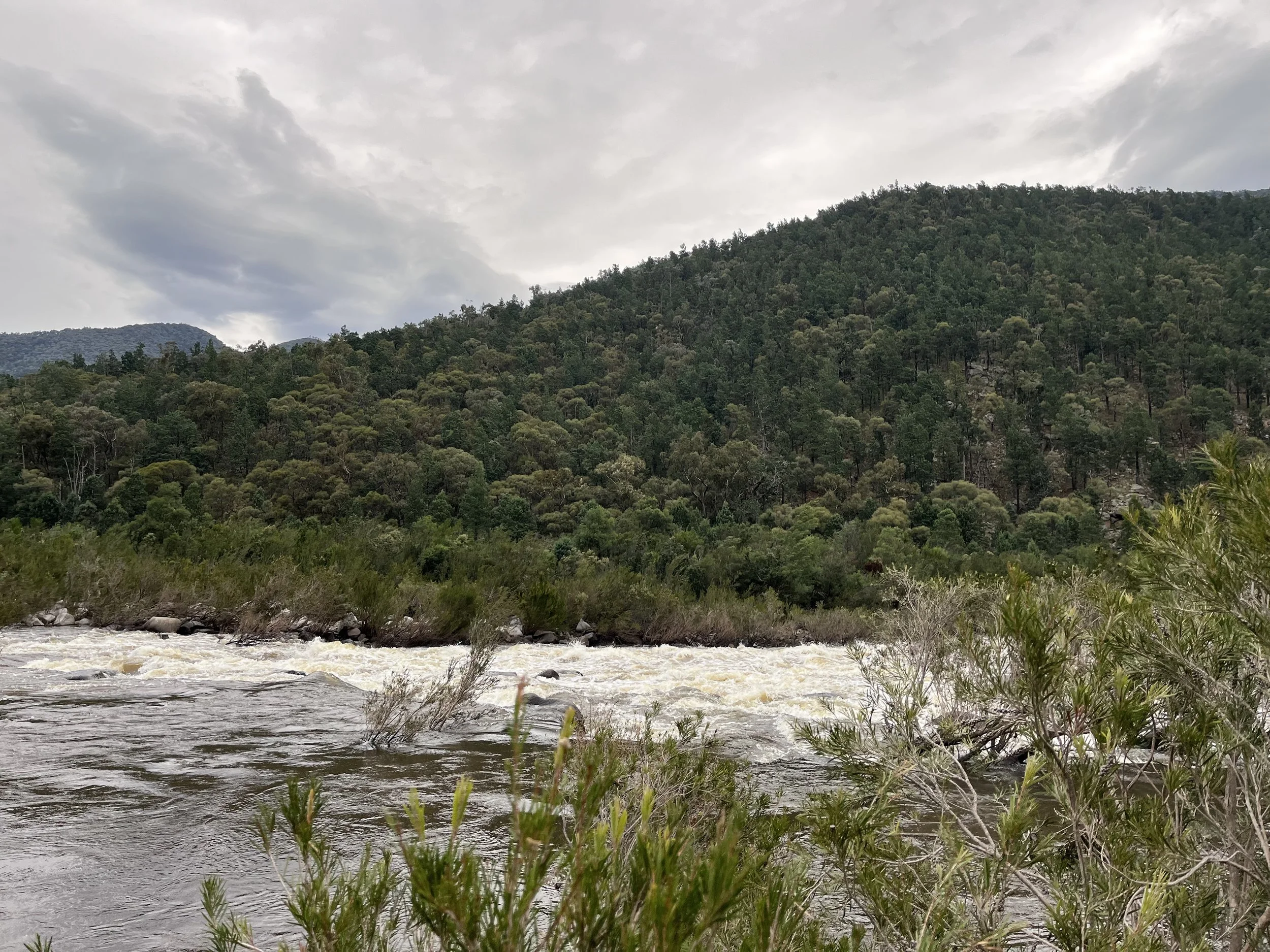
Day 4 → Wills Campground at NSW/VIC Border 21km
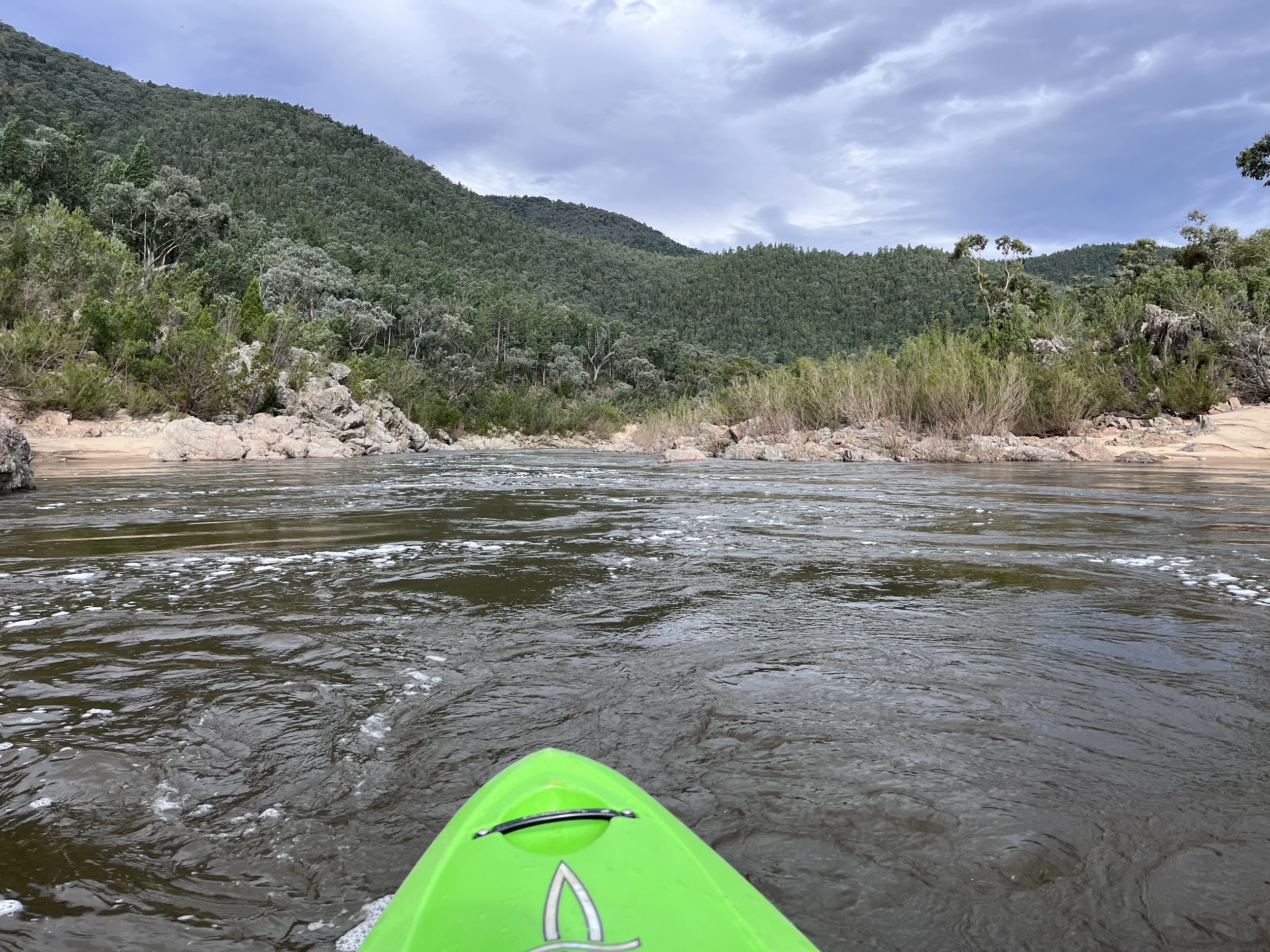
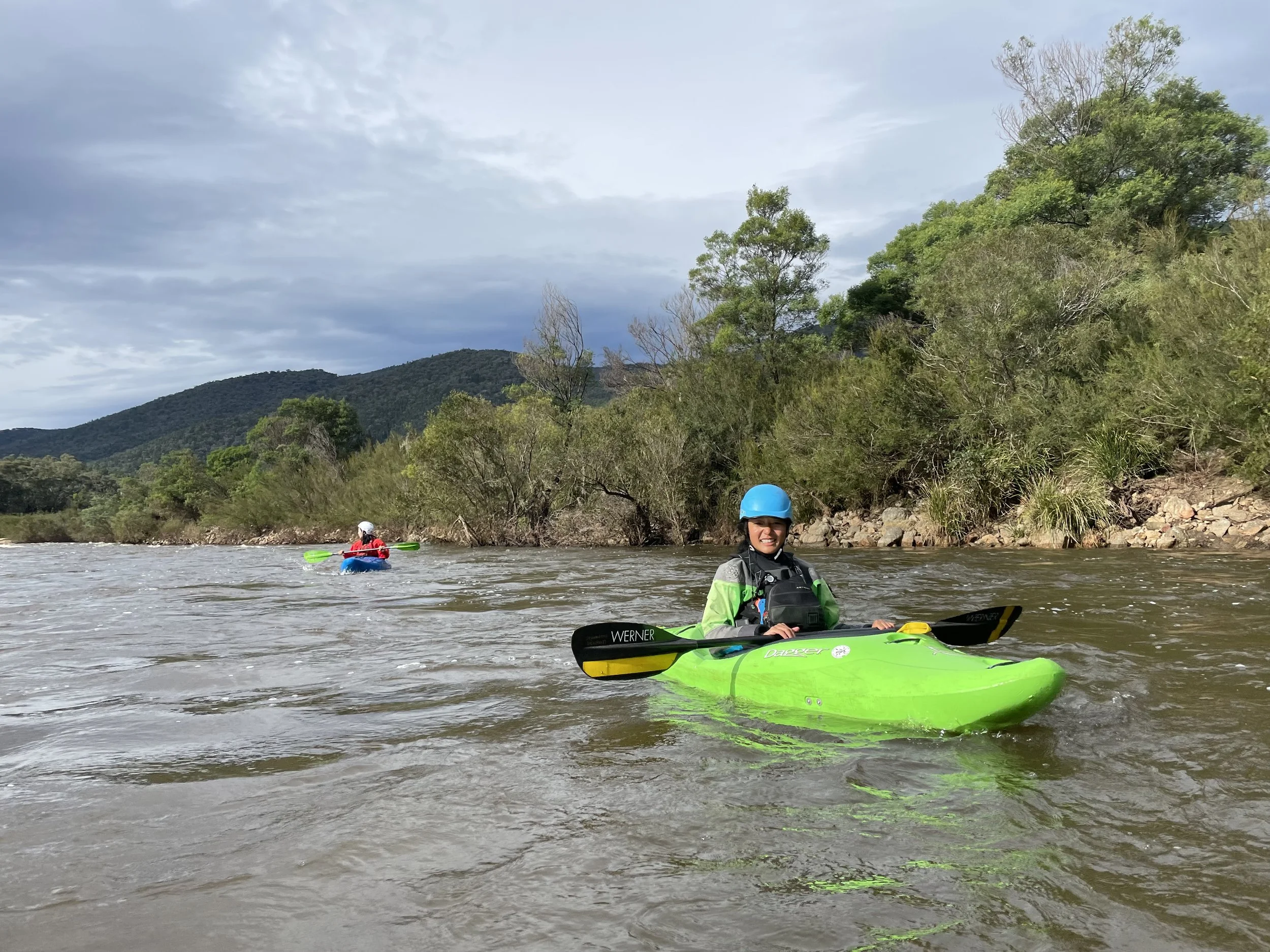
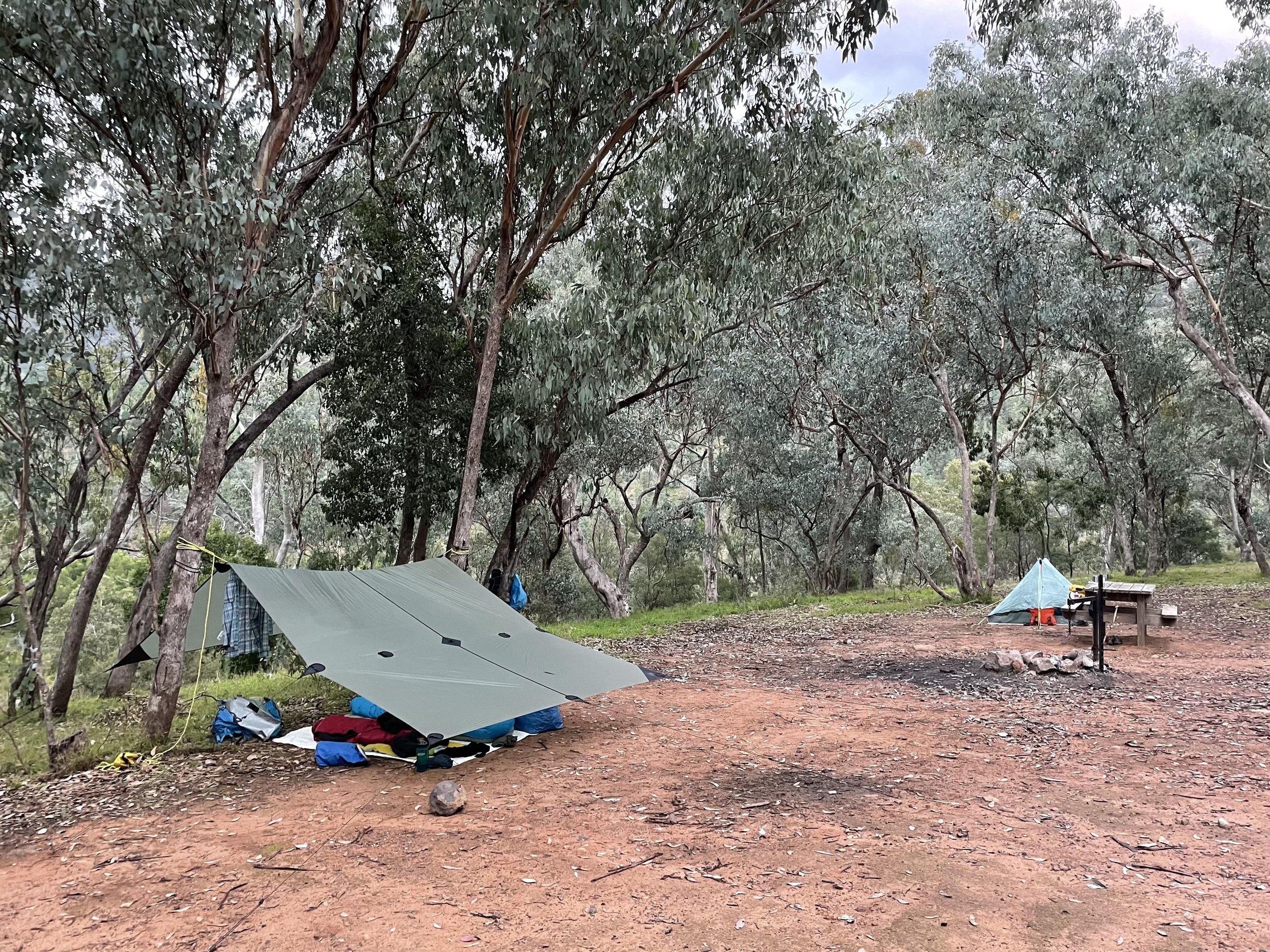
The day began with a beautiful section of Grade 2–3 rapids through a boulder-filled gorge. It was fun, technical, and engaging without being overwhelming. We had to portage Pinch Falls, which broke up the flow. We crossed into Victoria and camped at Wills Campground. It felt like luxury—benches, a fireplace, toilets. After days of bush camping, it almost felt surreal. We spent the afternoon drying gear, reorganising, and briefly remembering what it feels like to be “clean and human” again.
Day 5 → Mckillops Bridge 35km
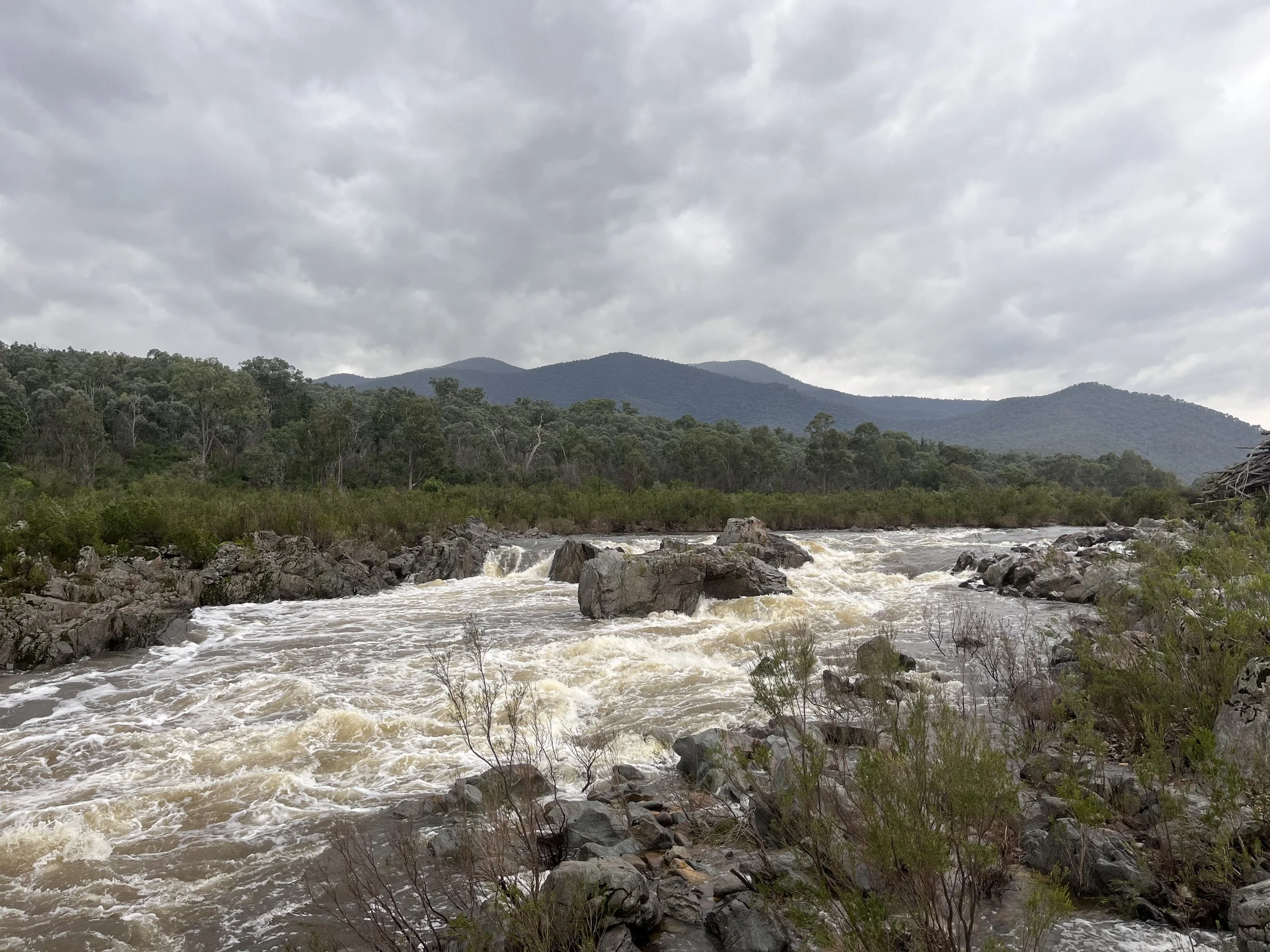
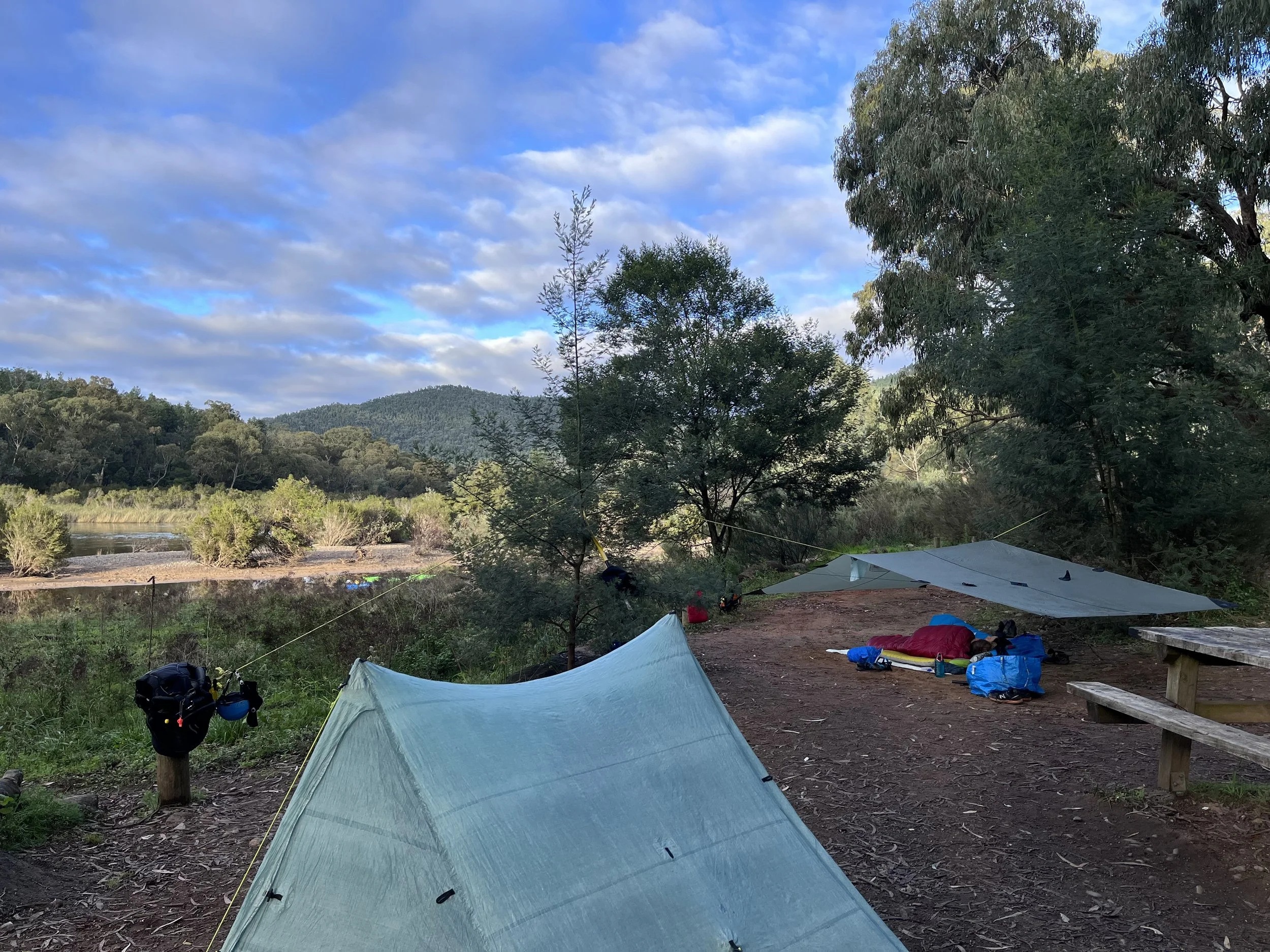
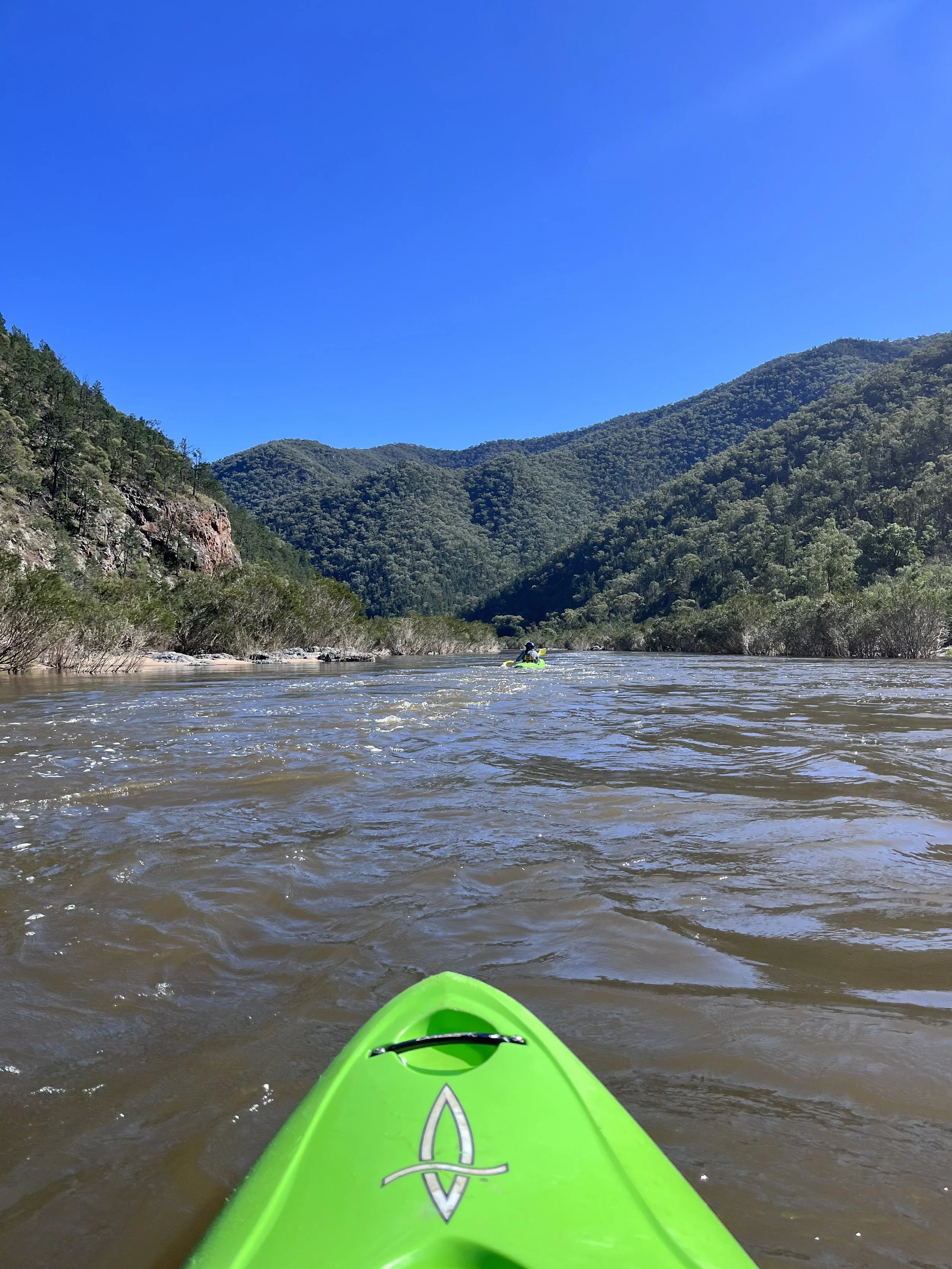
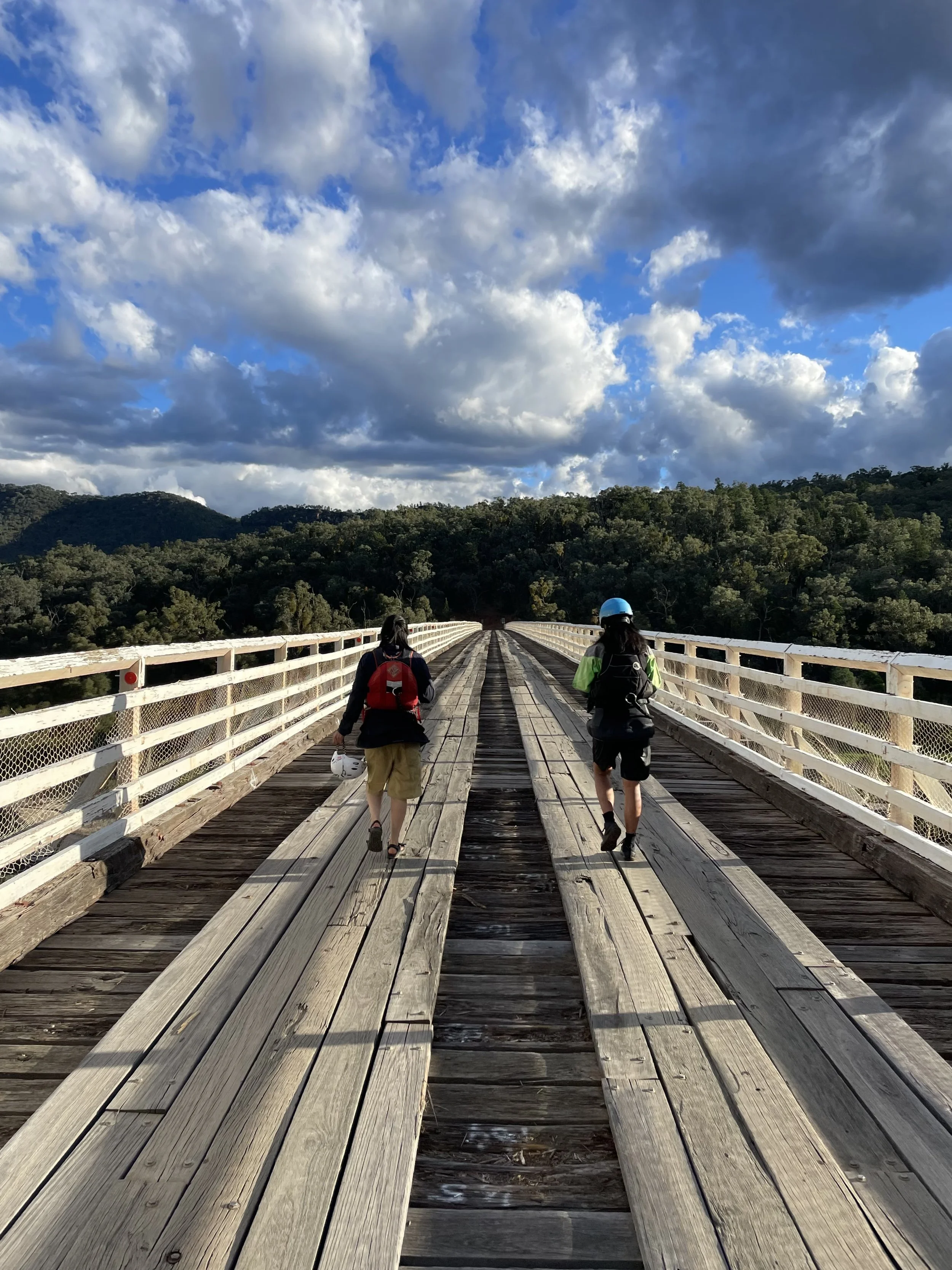
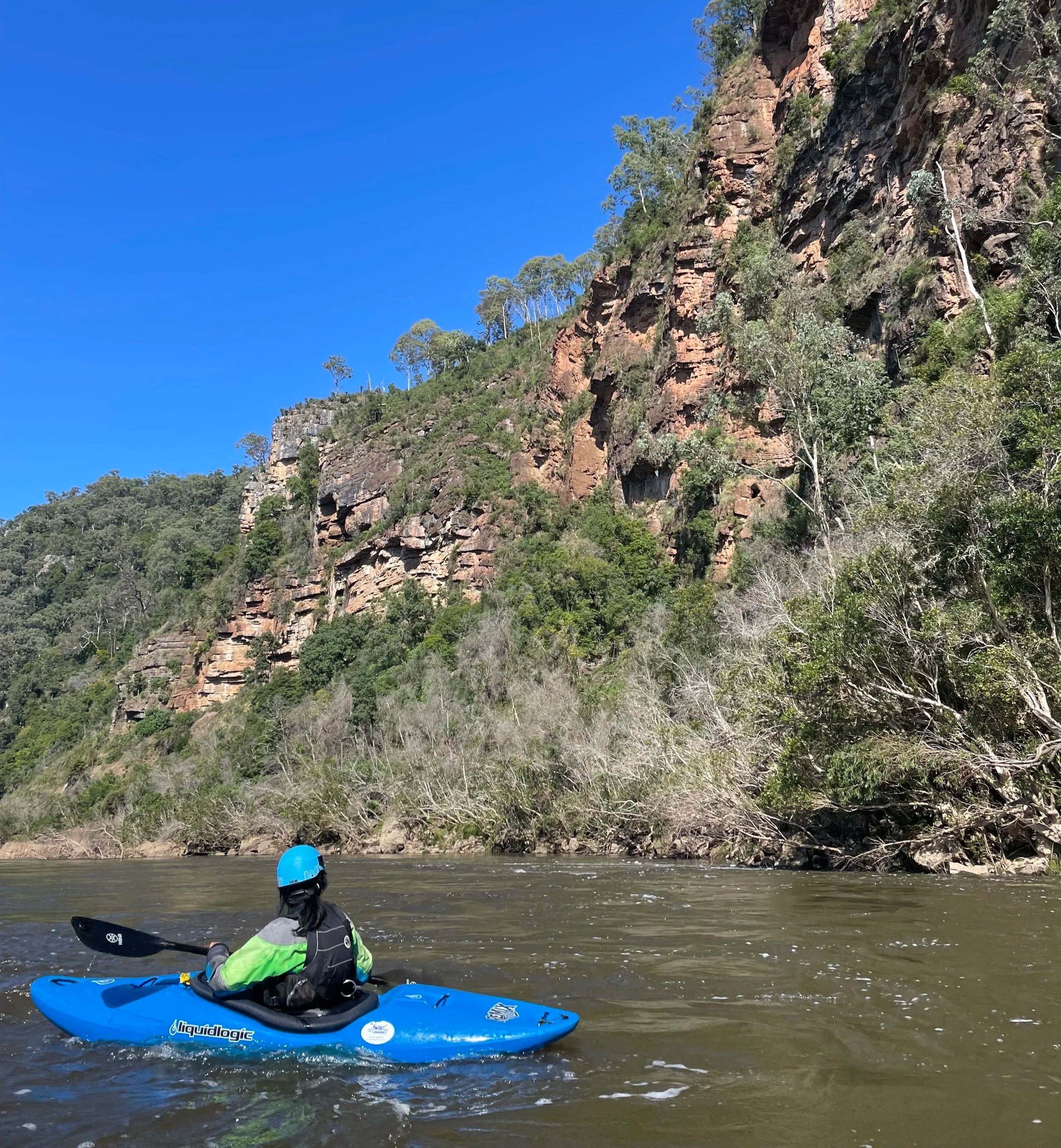
We woke to a beautiful sunny morning and had a strong, straightforward day on the water. The river ran big-volume Grade 1–2 rapids, smooth and continuous, with stunning scenery the entire way. We were thrilled to reach McKillops Bridge. The gauge read 2 metres. We planned to run the gorge the next day.
Day 6 → End of Tulloch Ard Gorge/Gentle Annie Rapid 37km
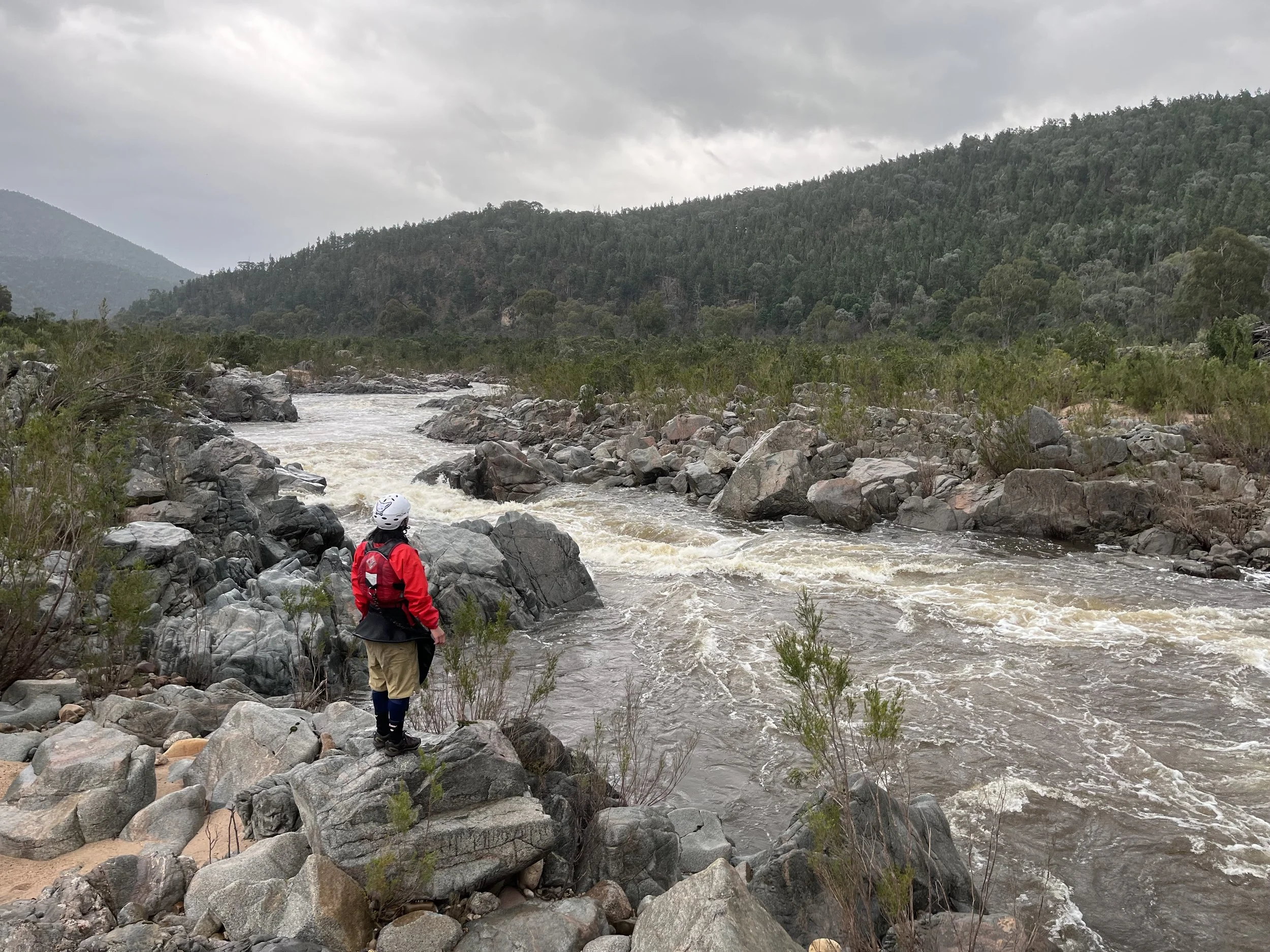
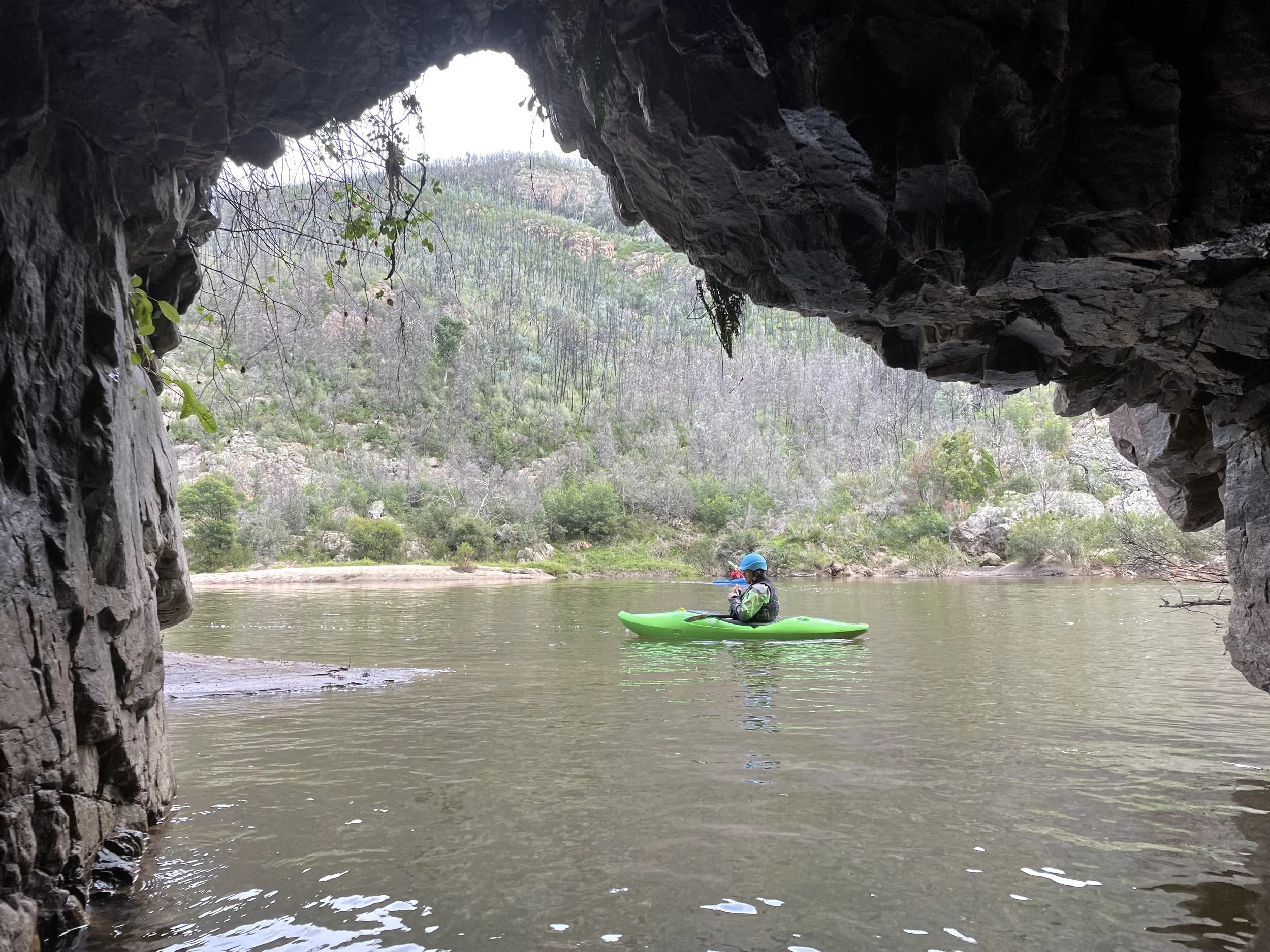
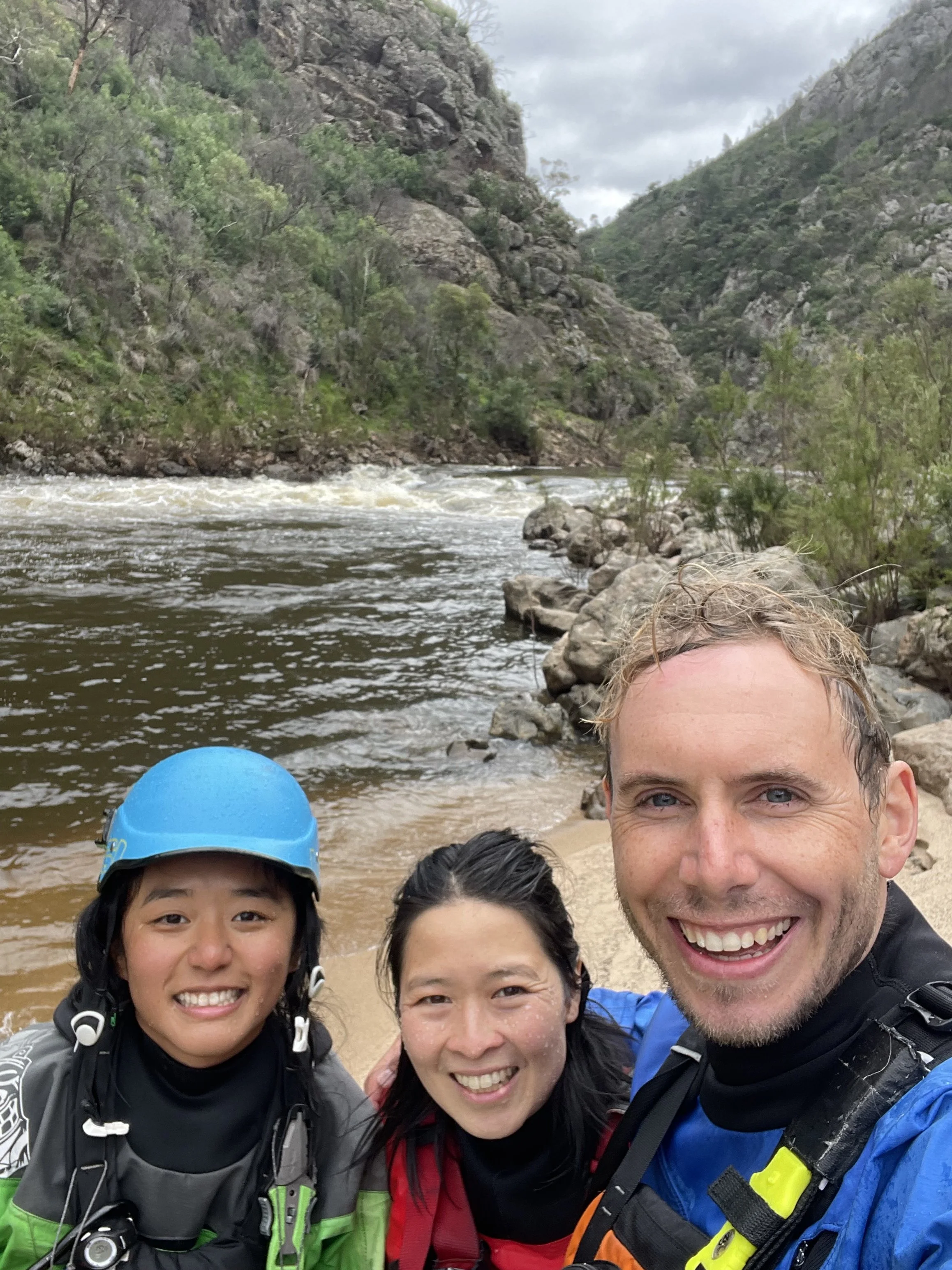
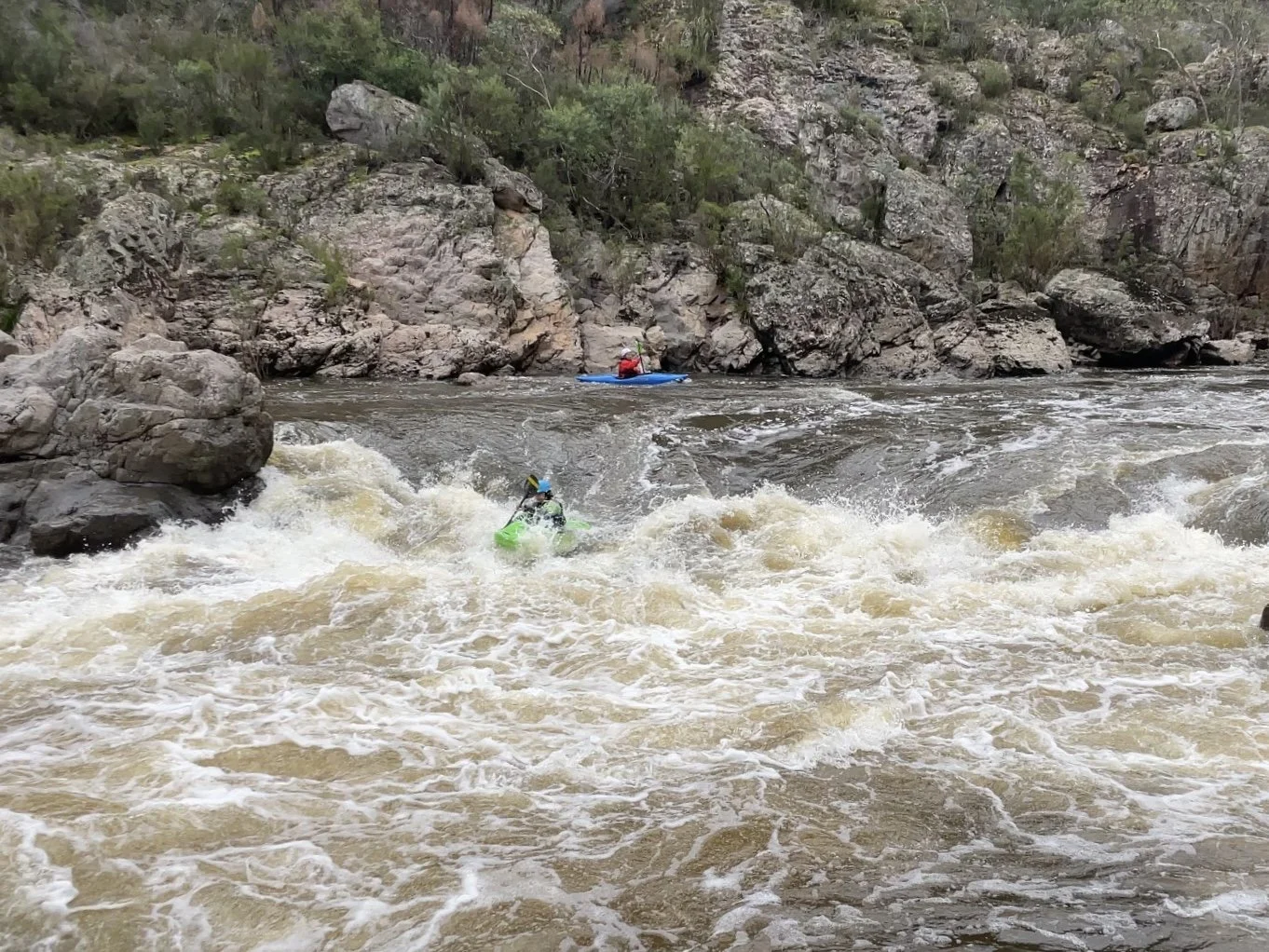
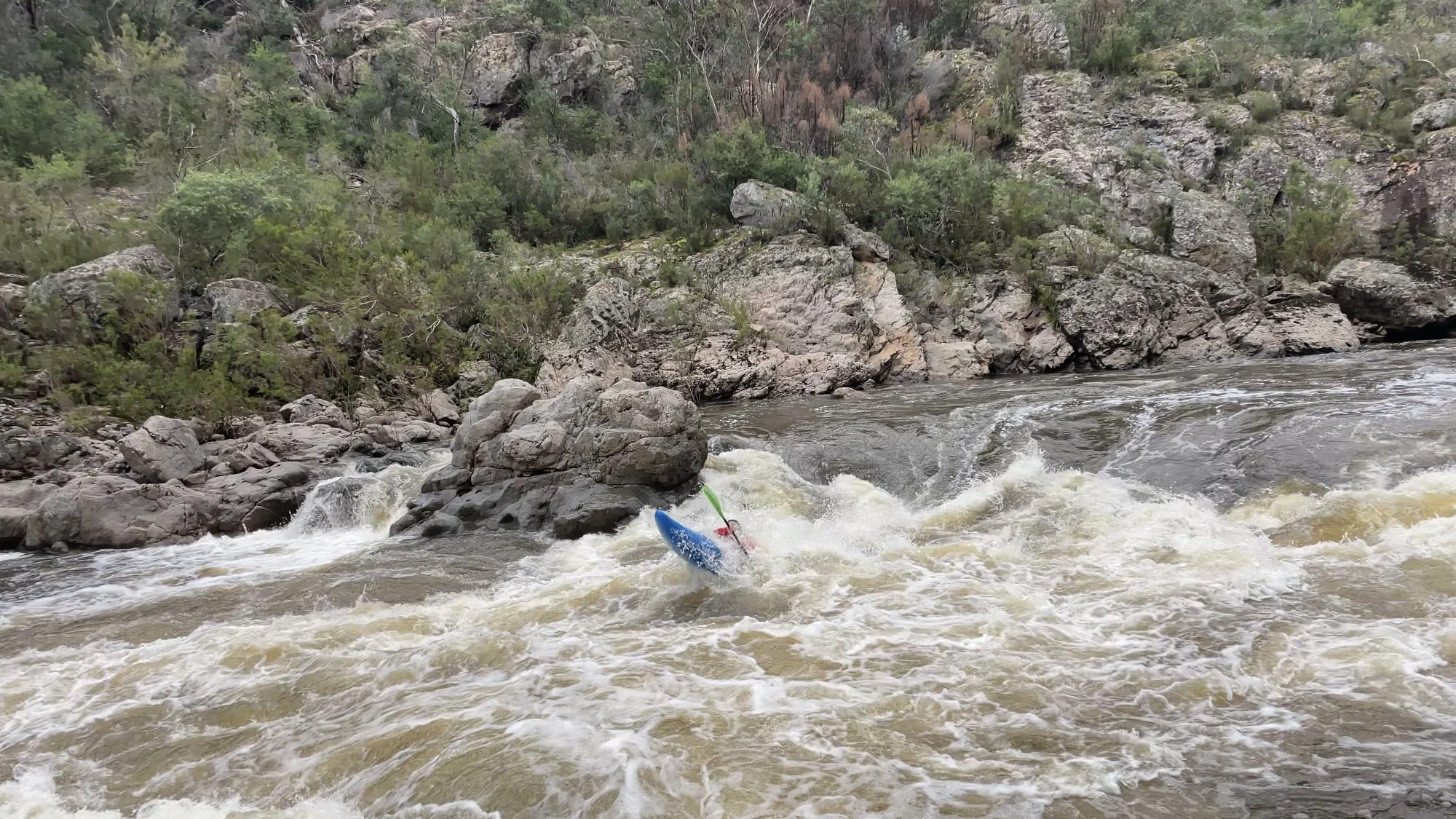
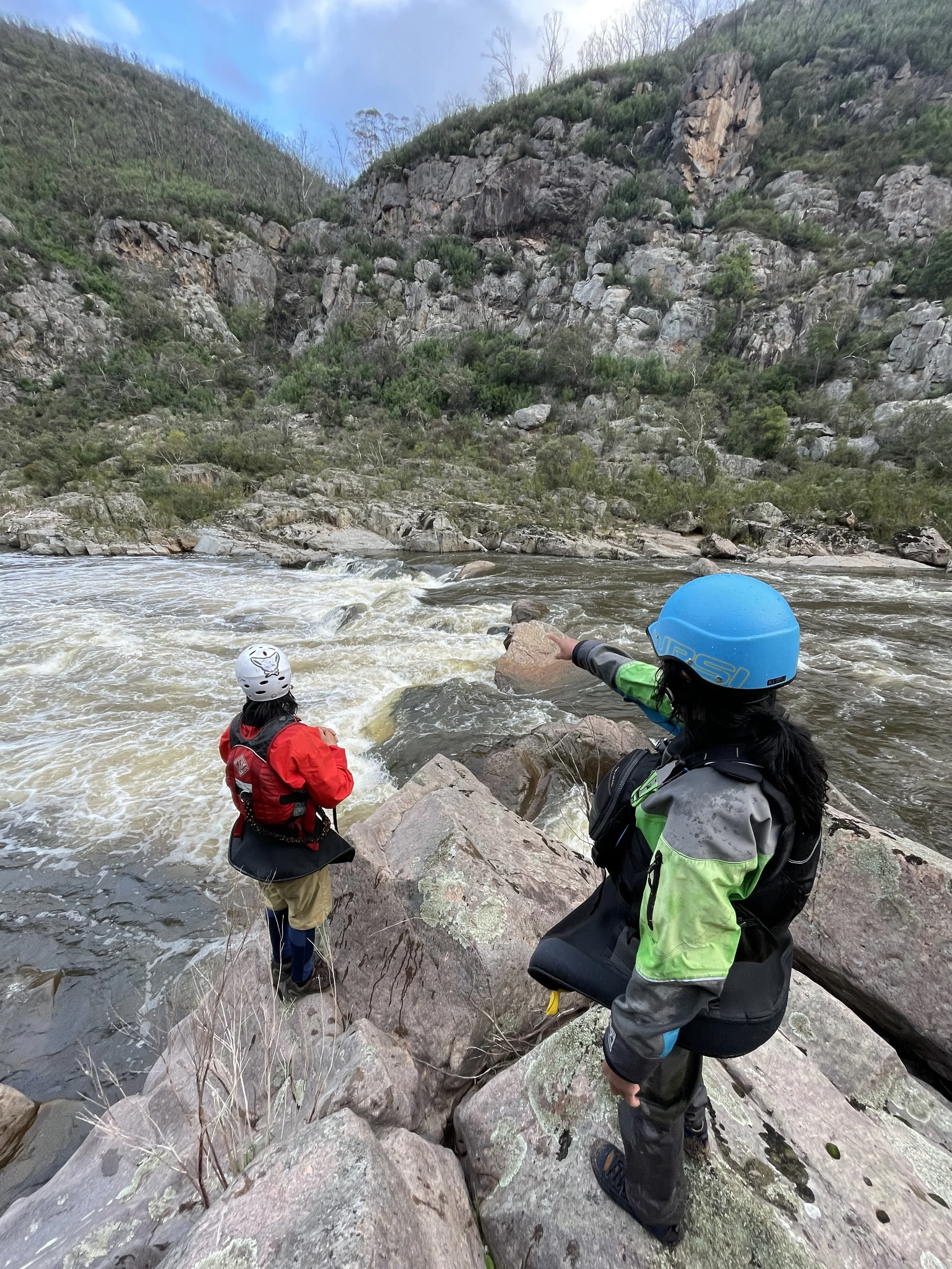
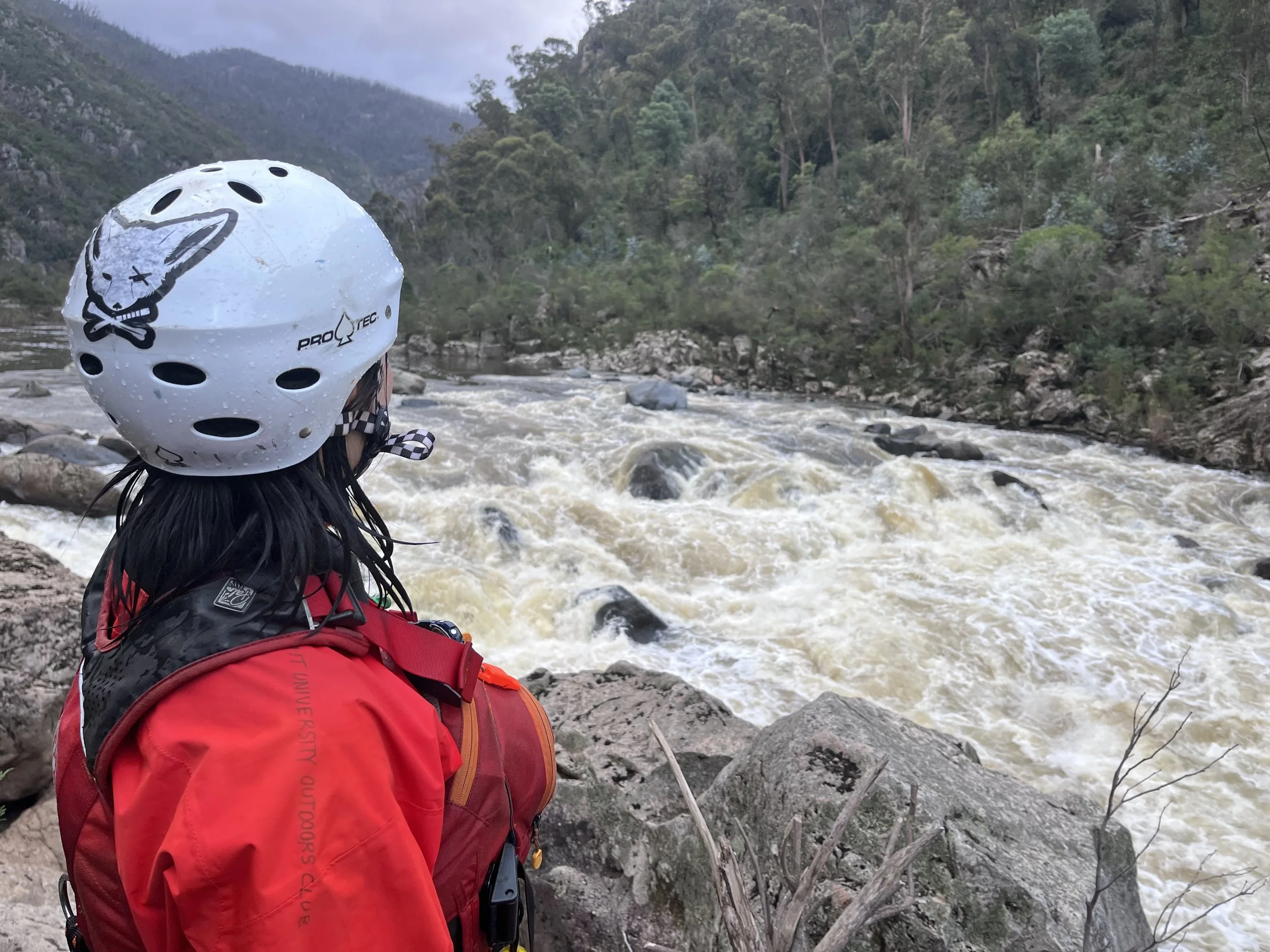
What a day! We committed to the gorge from McKillops Bridge at 2m flow. Everything moved faster and felt more powerful. Most rapids were big wave trains, with features like A-frames washed out by the volume. We portaged George’s Mistake I and Gentle Annie. We both have paddled those rapids at lower level multiple times before, but it wasn’t for us given the condition on the day. Justine and I ended up lining George’s Mistake II and everything else — it became one of the highlights of the trip. Big water, big nerves, and a lot of laughter through the intensity. It was a full day of focus, and we arrived at camp just on dark—relieved, exhausted, and buzzing.
Day 7 → Buchan Confluence 35km
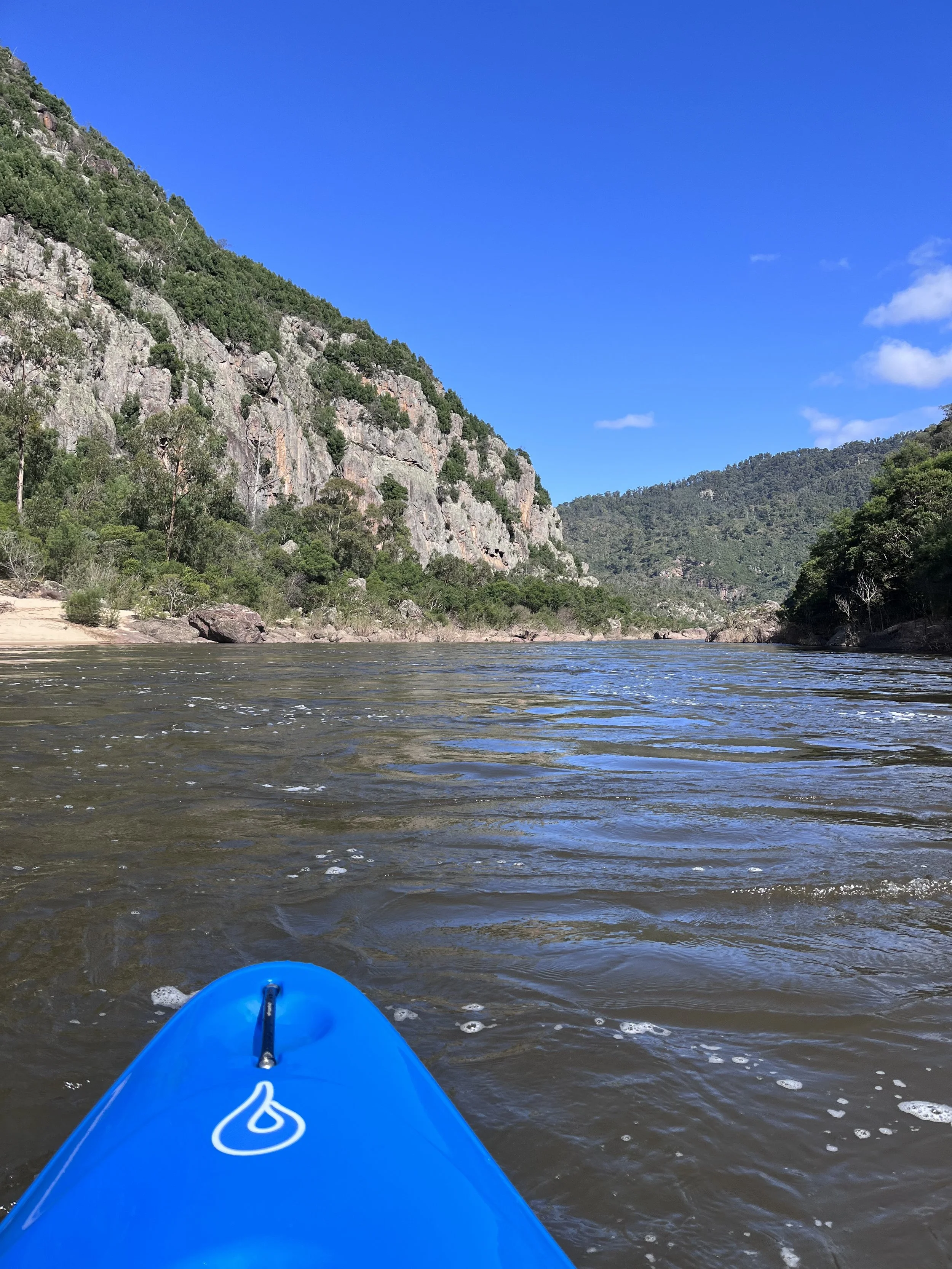
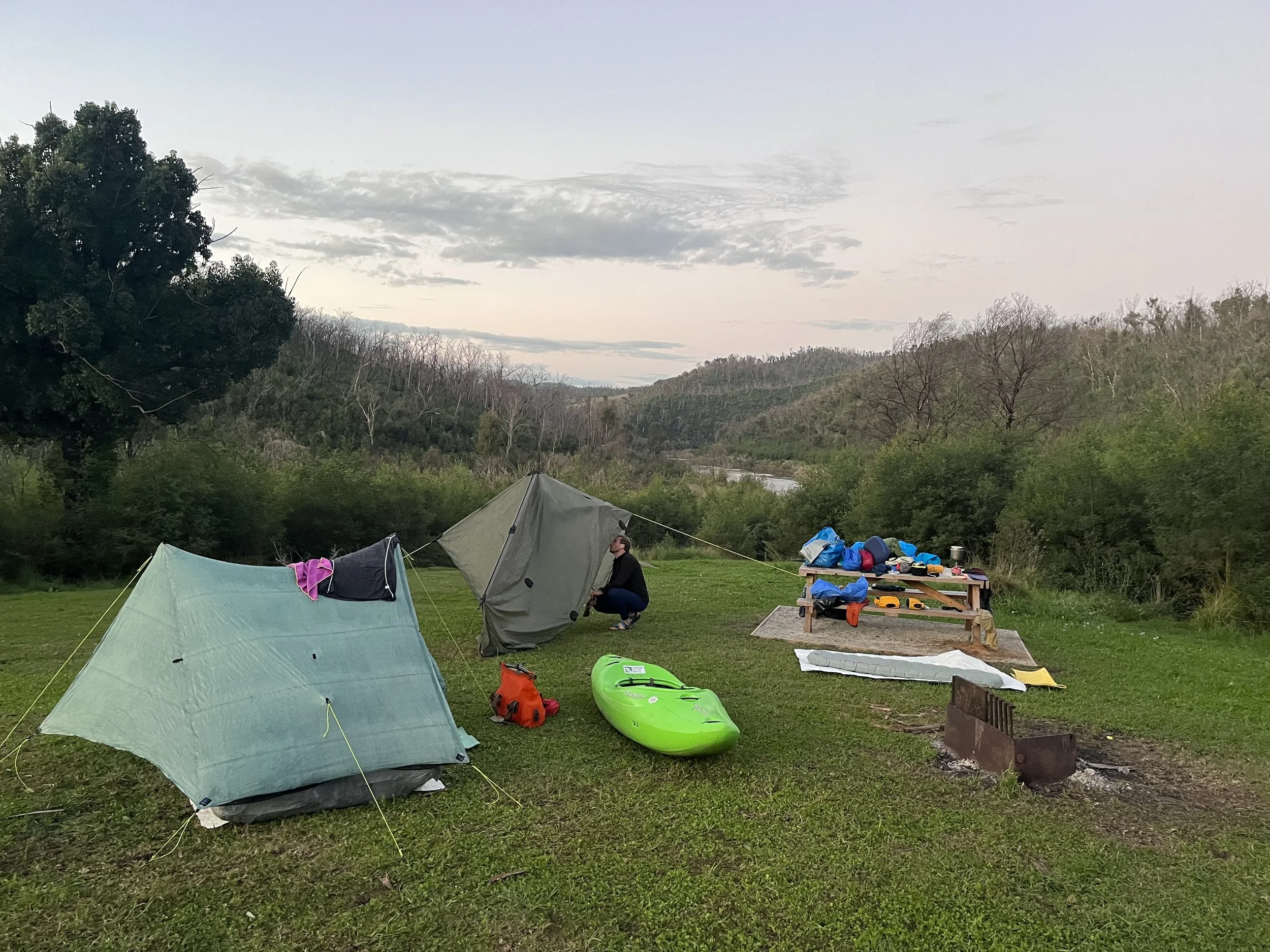
Another beautiful day on the river. The landscape opened up again, and the paddling felt playful and fun. The rapids were enjoyable rather than intimidating. I tried out Justine’s boat and it was faster than mine. It normally take 2 days to paddle this relatively flat section, but it was moving fairly quickly at 2m. We reached the Buchan Confluence and found a perfect grassy campsite with a drop toilet—simple comforts that felt very welcome at that point in the trip.
Day 8 → Wood Point 25km
I expected a long, flat 40 km slog until Orbost—but the river surprised us again. The first 15 km were full of fun Grade 2 rapids, keeping things lively and engaging. Then we came around a corner and heard a decent rapid ahead. I put my drysuit back on, and things escalated quickly. In the middle of the rapid I looked back and saw Justine and Craig both upside down at different points. There were three rolls for Justine and one swim for Craig on that day - more than what we had in total despite the river got a lot easier. We all came through laughing. Later we met another kayaker on the river, which added to the energy of the day. It was one of those days that stayed unpredictable right until the end.
Day 9 → Bete Belong (upstream of Orbost) 6km
Final day. Everything had flattened out into gentle water. We paddled the last 6 km to the road, ending the river journey quietly and simply. We tried to hitchhike back to Delegate, but there was no traffic, so I ended up taking a taxi instead. I picked up my car in Orbost and drove back. From there, we loaded the kayaks and drove to the Delegate River Tavern. A cabin, hot shower, and flushing toilets felt like pure luxury after nine days on the river.
Logistics
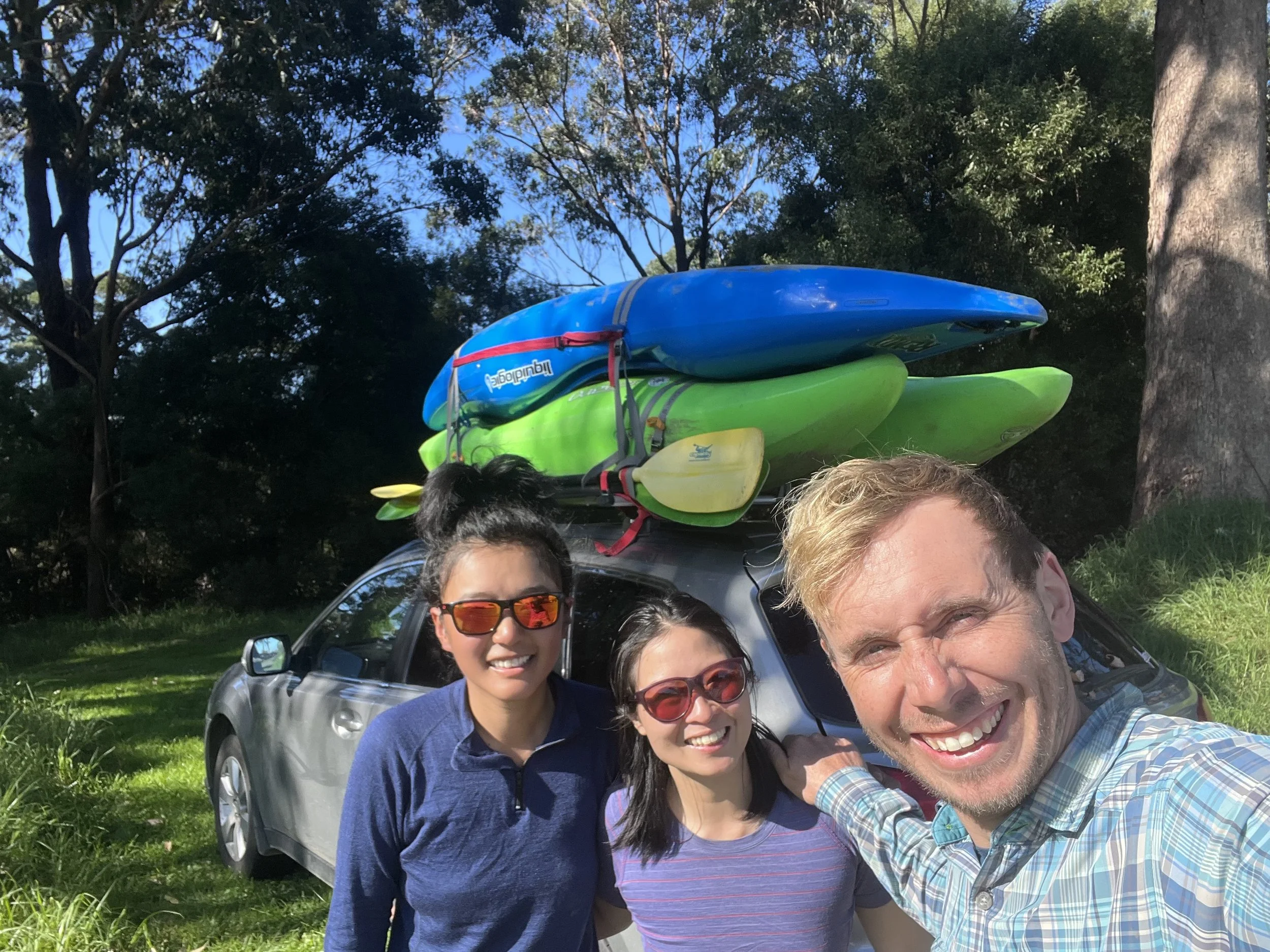
We took Craig’s car (4WD) and my car (AWD) from Melbourne. Each car was capable of carrying 3 kayaks on the roof racks and all our gear with 9 days of supplies which made car shuttle easier. I parked my car near the Police Station in Orbost and left a note this time. We moved our gear onto Craigs car and drove up to Delegate and camped at the holiday park. We drove down to the river with Craig’s car to the put in. After we picked my car up in Orbost, we retrieved Craig’s car back the next day and drove back to Melbourne.
Gear
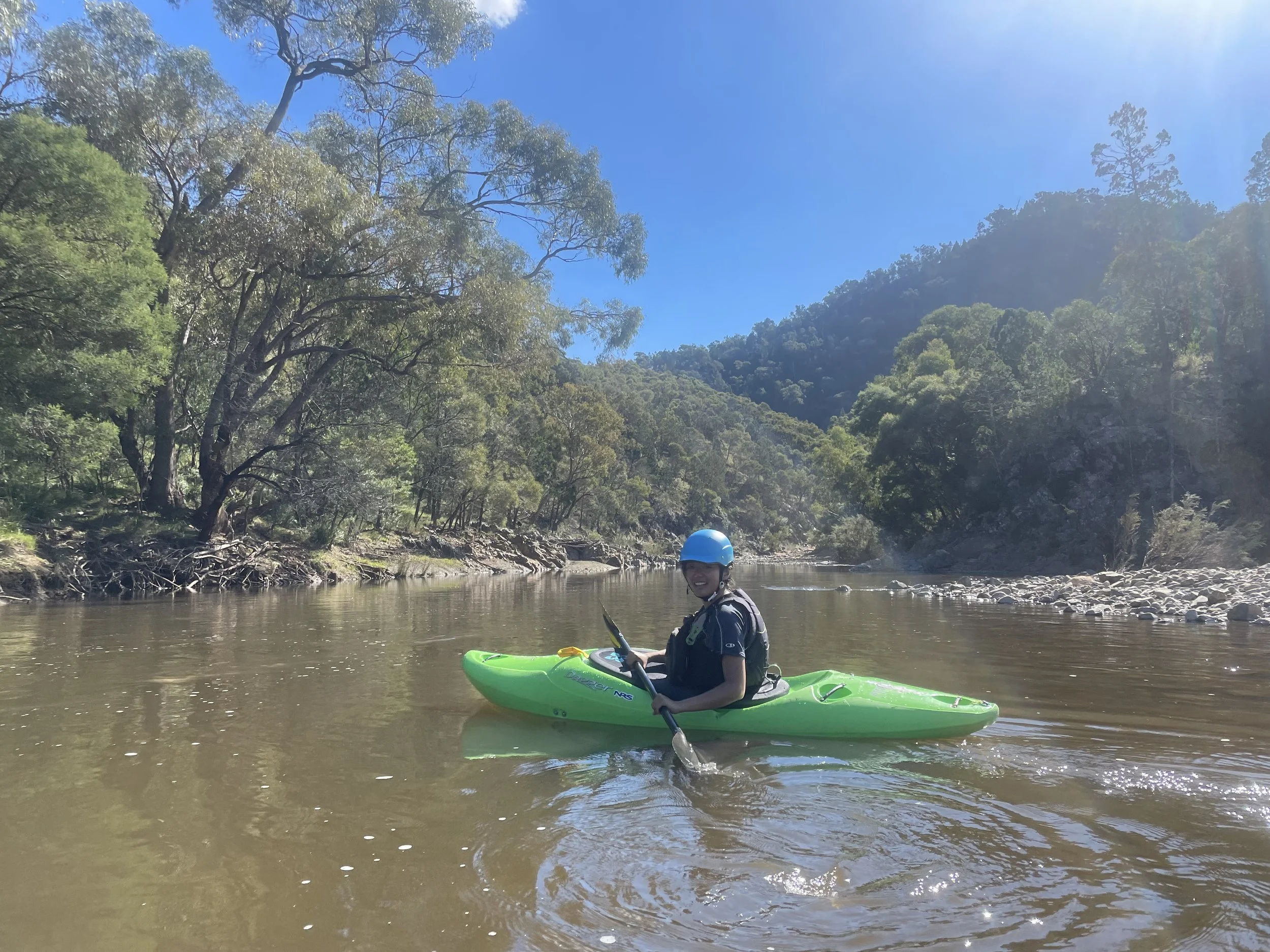
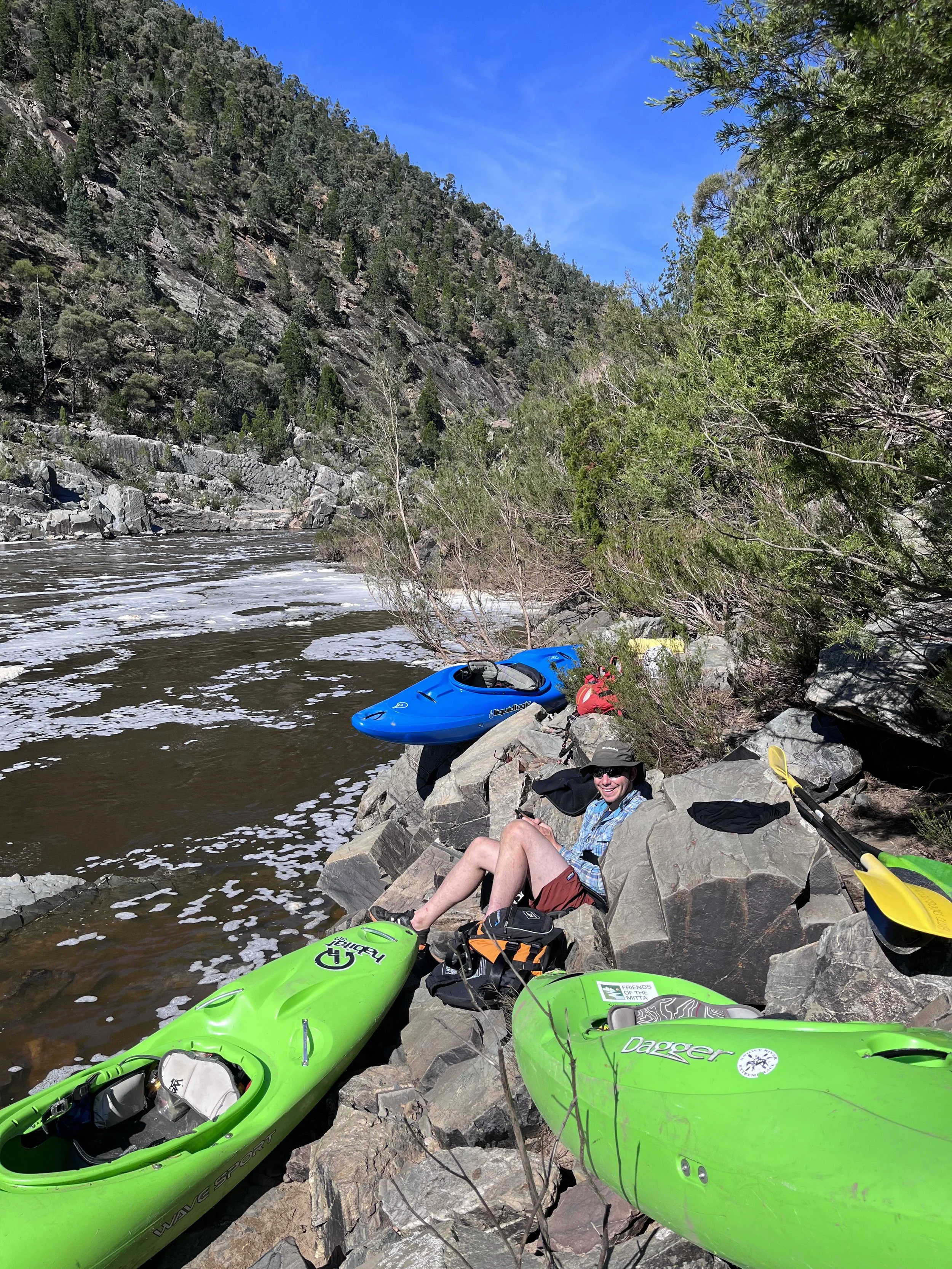
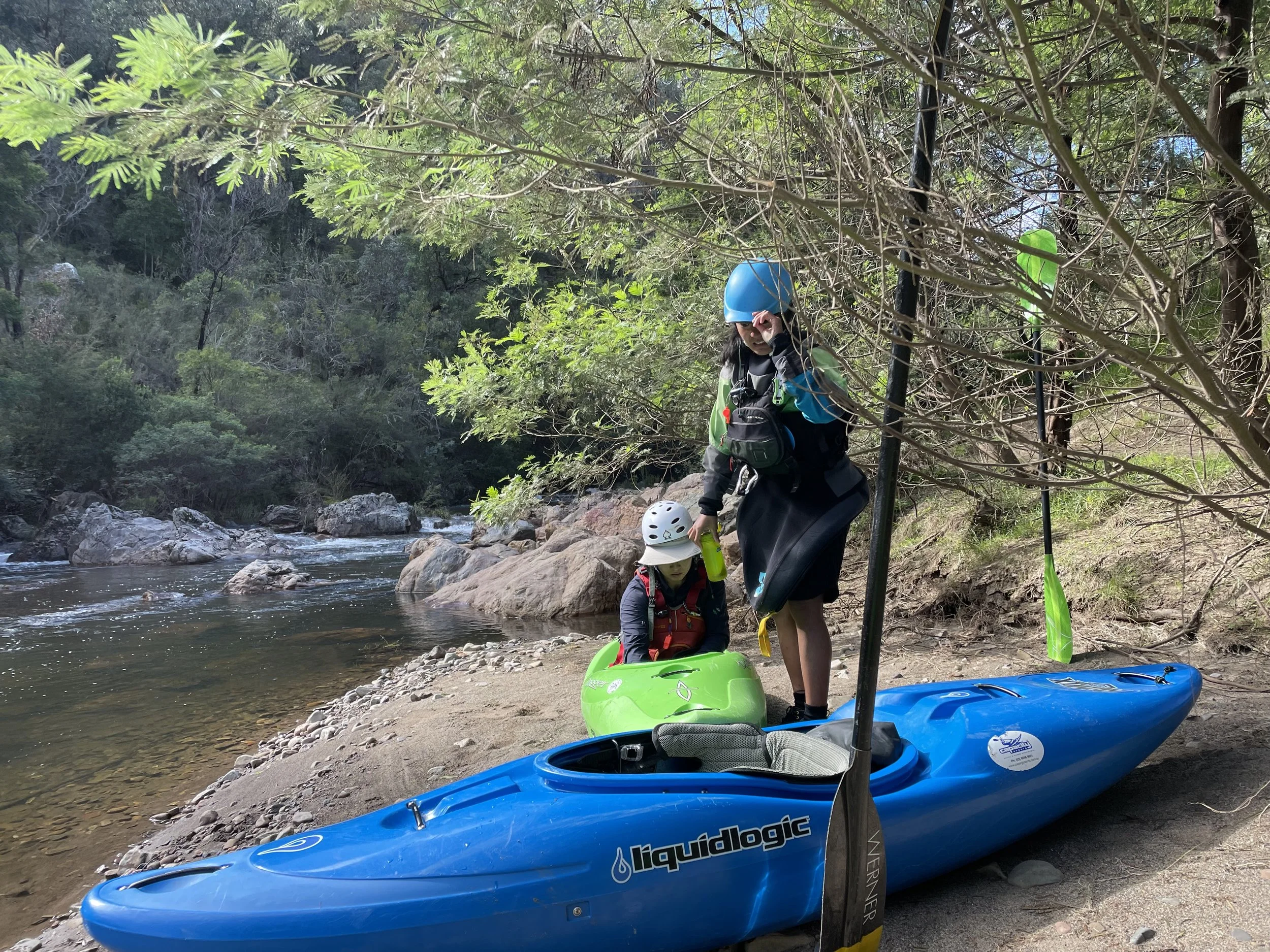
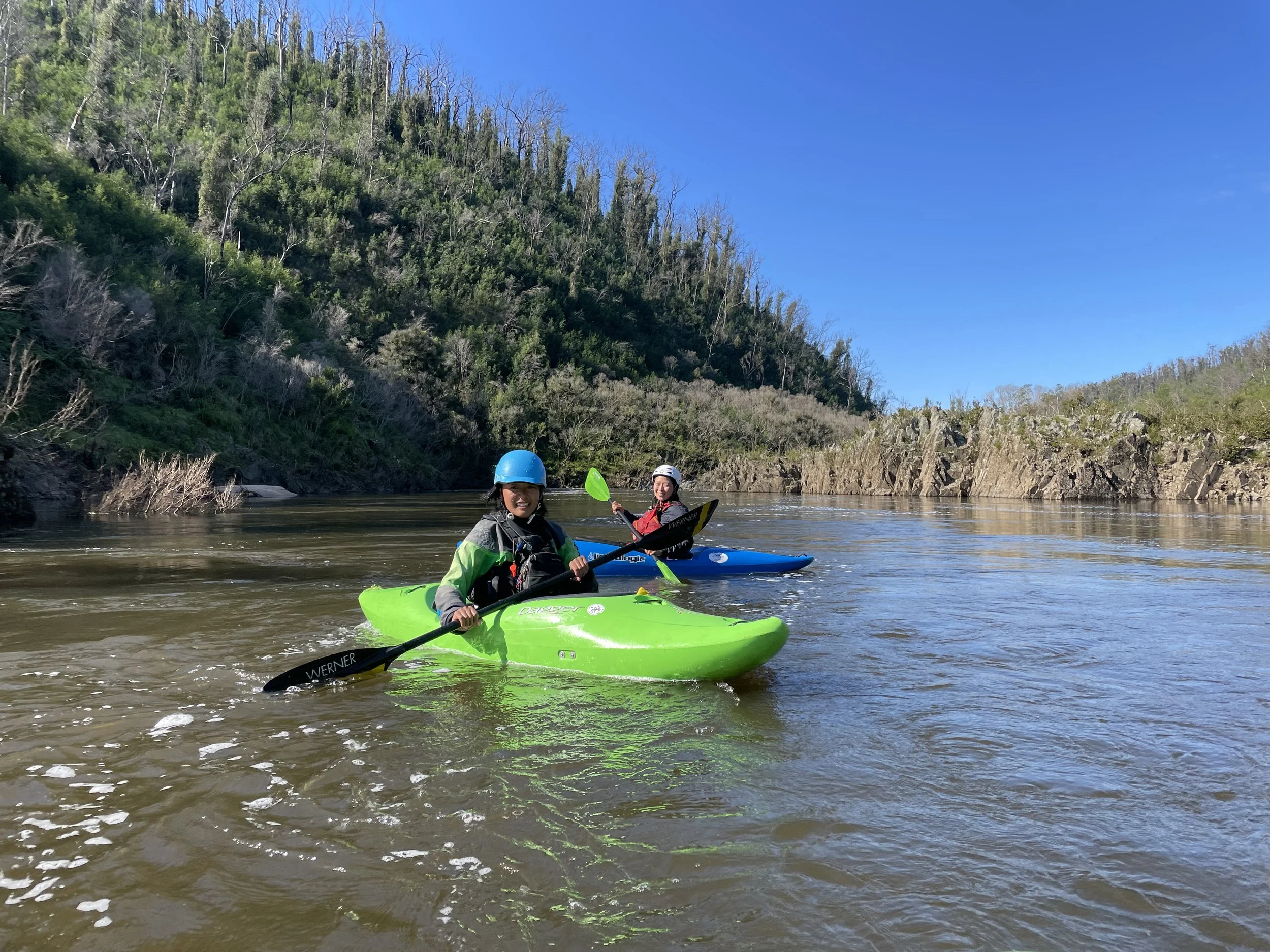
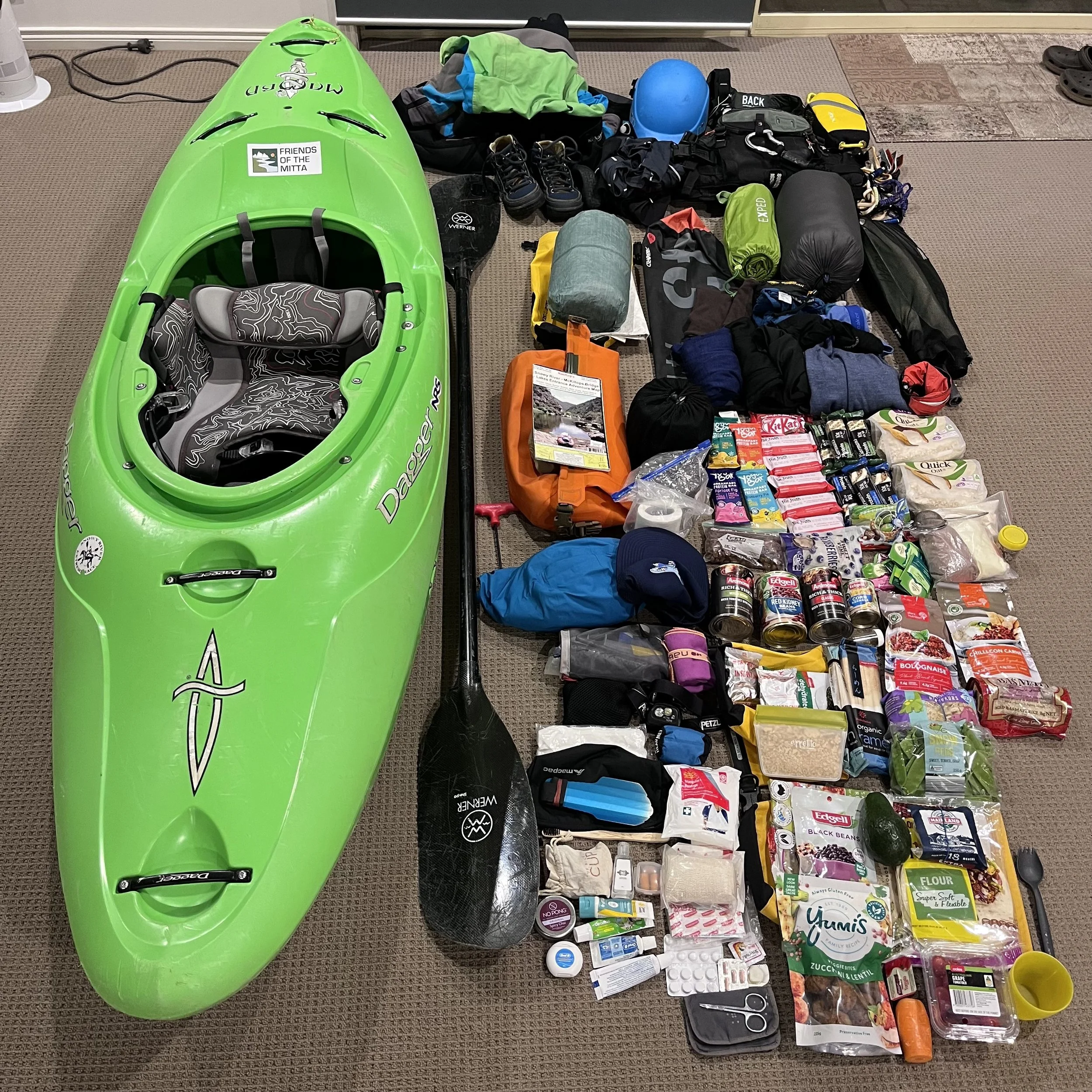
Justine and I owned our own kayaks. I paddled a Dagger Mamba 7.6 and Justine had a Liquidlogic Remix. Craig borrowed a Wavesport Habitat. I practiced packing my kayak at home and weighed each item, so each side of my kayak weighed about the same to keep the boat balanced on the river.
That’s what I had on me and in my boat. We had another a stove and a pot, a 4 piece paddle, 2 more throw bags, a tool kit, 3 more gas canisters, and a half sponge for group gear.
| Inside Boat | Wearing | Watershed Drybag 12L | Decathlon Drybag 12L |
| Kayak | Drysuit | 2 Pots | Sleeping Mat |
| Paddle | PFD | Stove | Sleeping Quilt |
| 4-piece Paddle | River Knife | Gas canister | Sleeping Liner |
| Throw Bag | Hand Paddle | Lighter | Pillow |
| River Maps | Skirt | Spoon | Rain Jacket |
| 500ml Nalgene Bottle | Wetsuit Socks | Cup | Wool Jumper |
| Small Plastic Bottle | Astral River Shoes | Water filter | Thermal top |
| Sit Mat | Helmet | 1L bladder | Thermal pants |
| IKEA Bag | 2 Slings | First aid kit | Neck warmer/beanie |
| Sandals | 3 Carabiners | Toiletries | Spare Undies |
| Groundsheet | 2 Prisiks | Electronics | Bedtime socks |
| 1 x 5L Drybag for Tent | 2 Pulleys | Small Towel | |
| 3 x 5L Drybag of Food | Watch | Hat | |
| Cans of Food | Whistle | ||
| Short Sleeve Thermal Top | |||
| Shorts | |||
| Bra | |||
| Undie | |||
| Socks |
Food
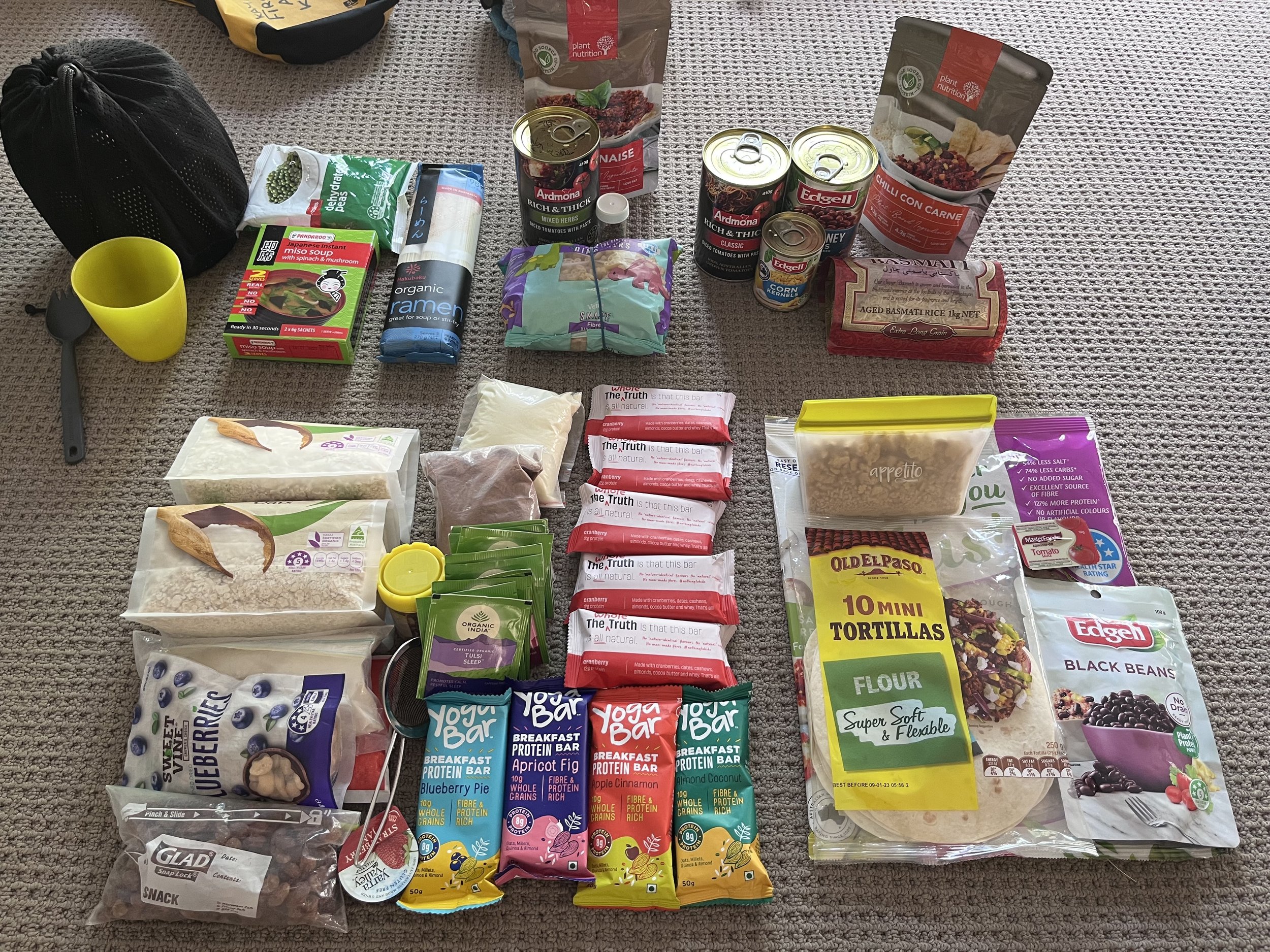
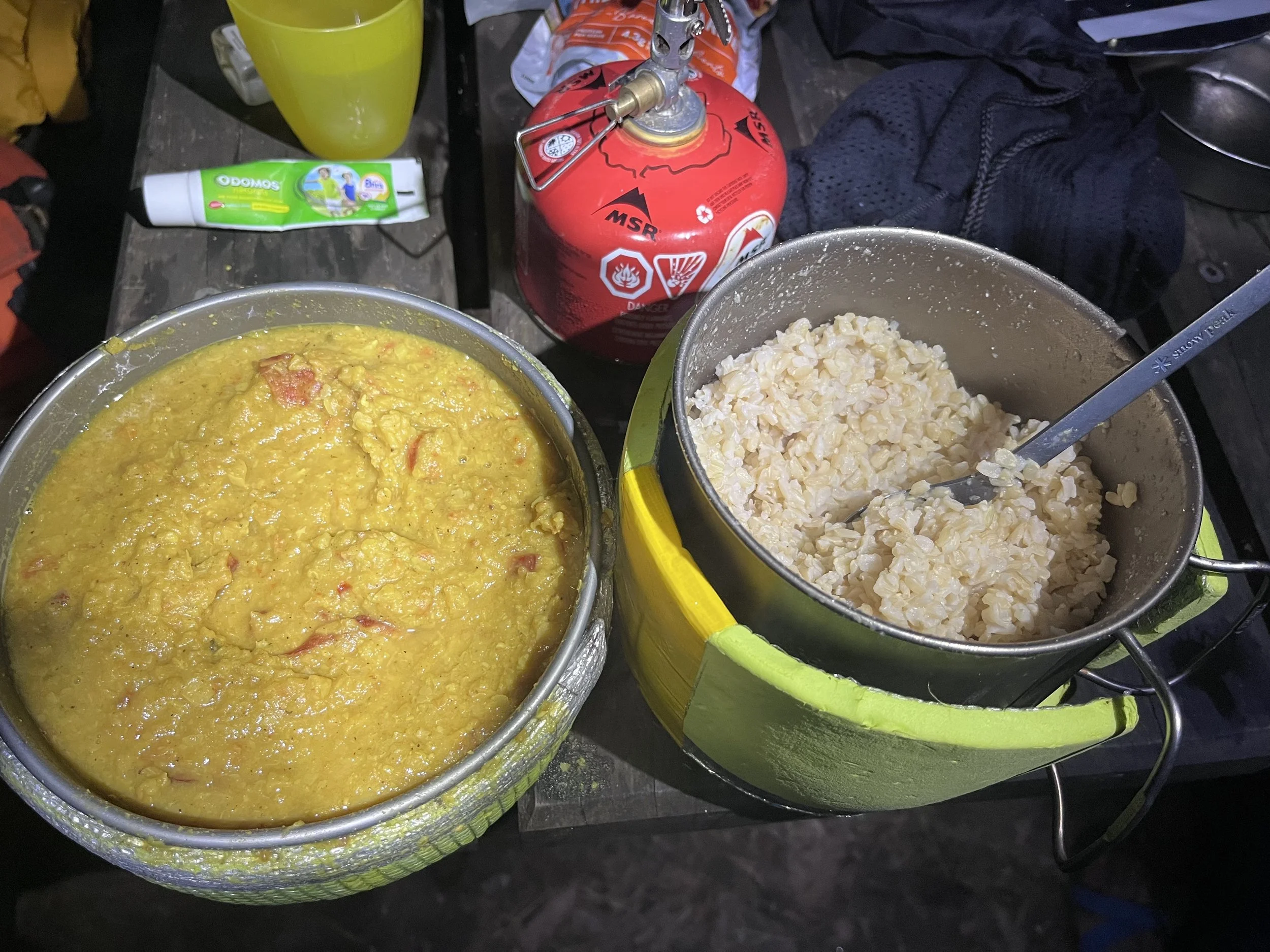
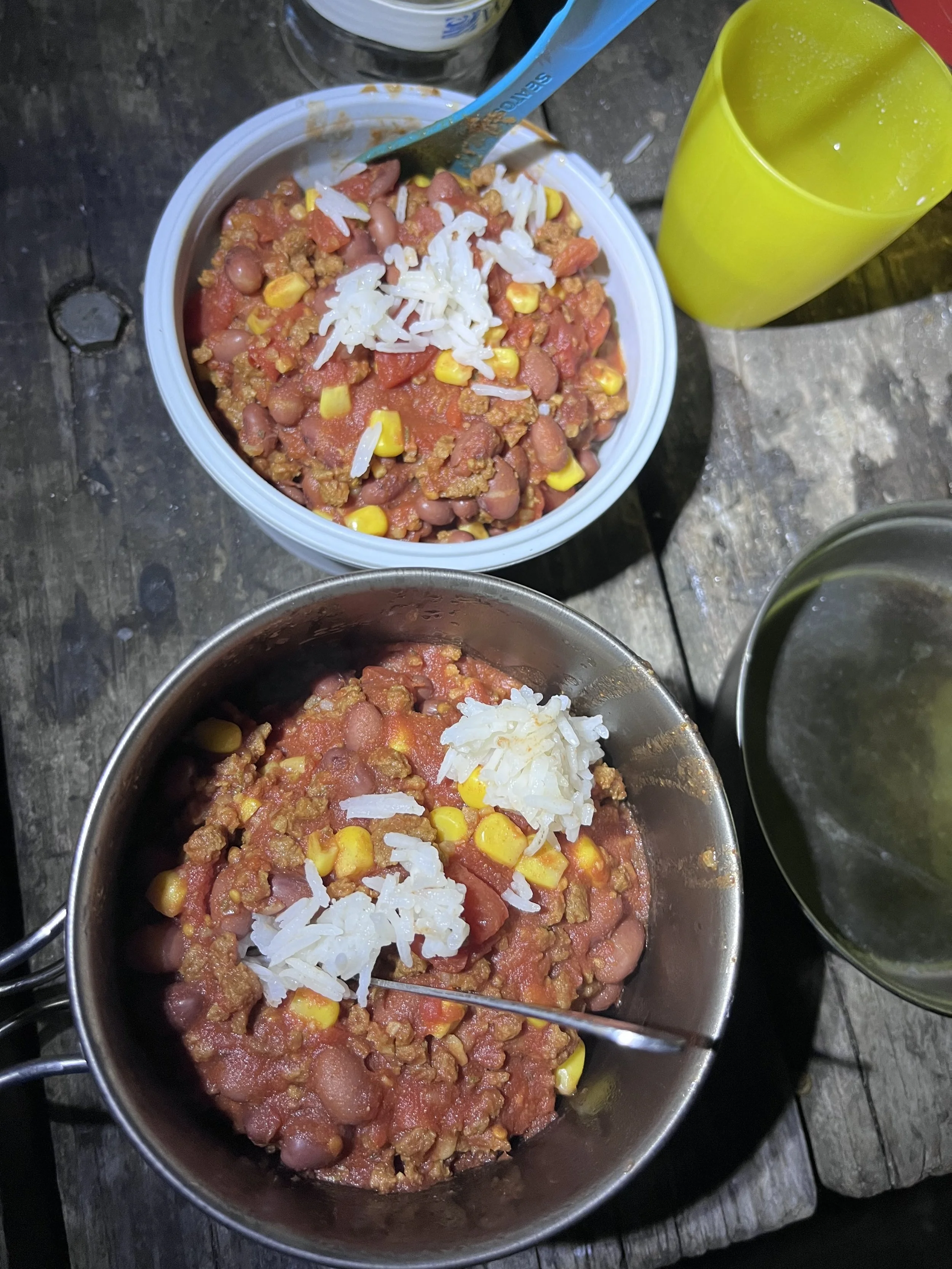
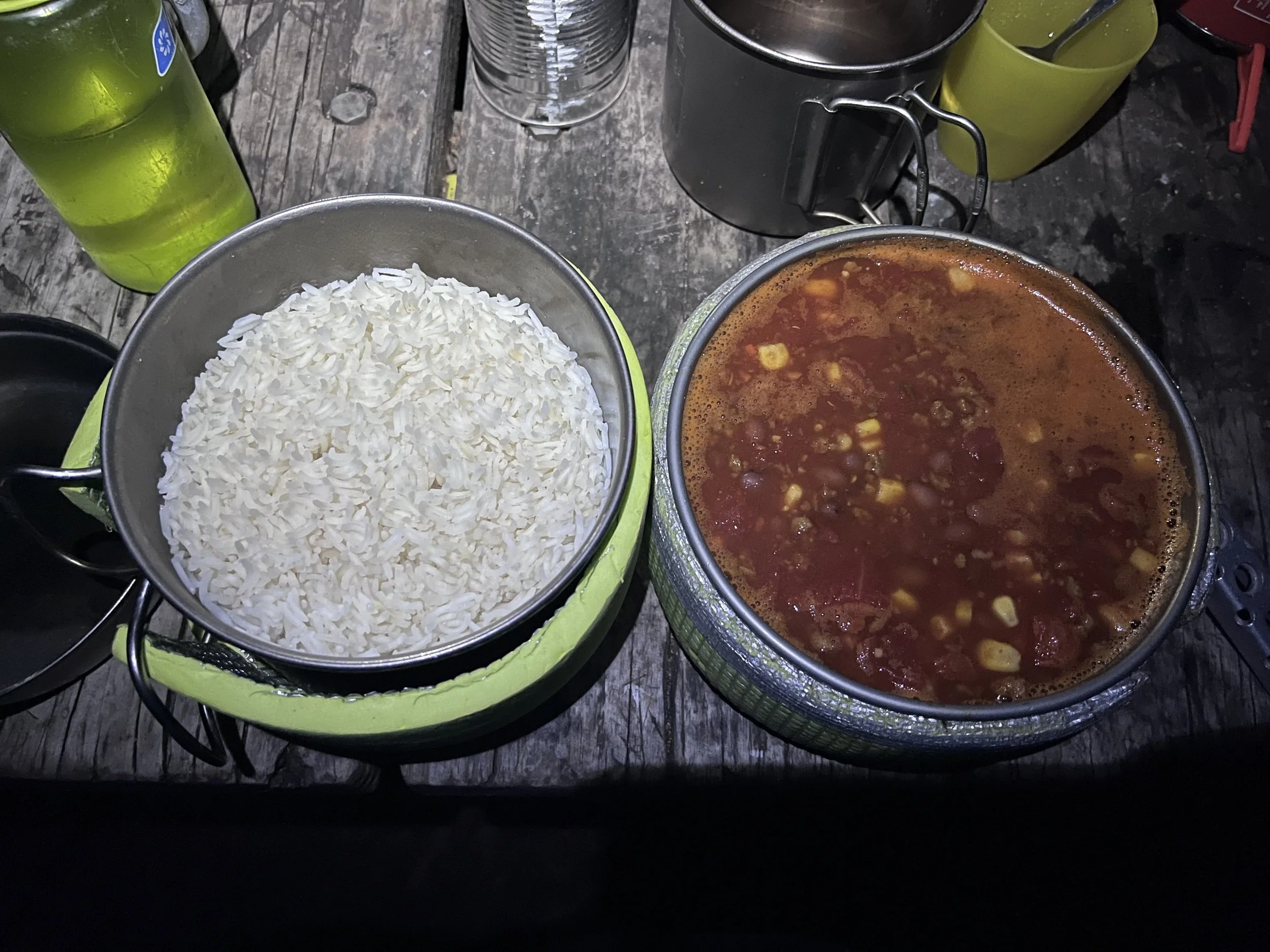
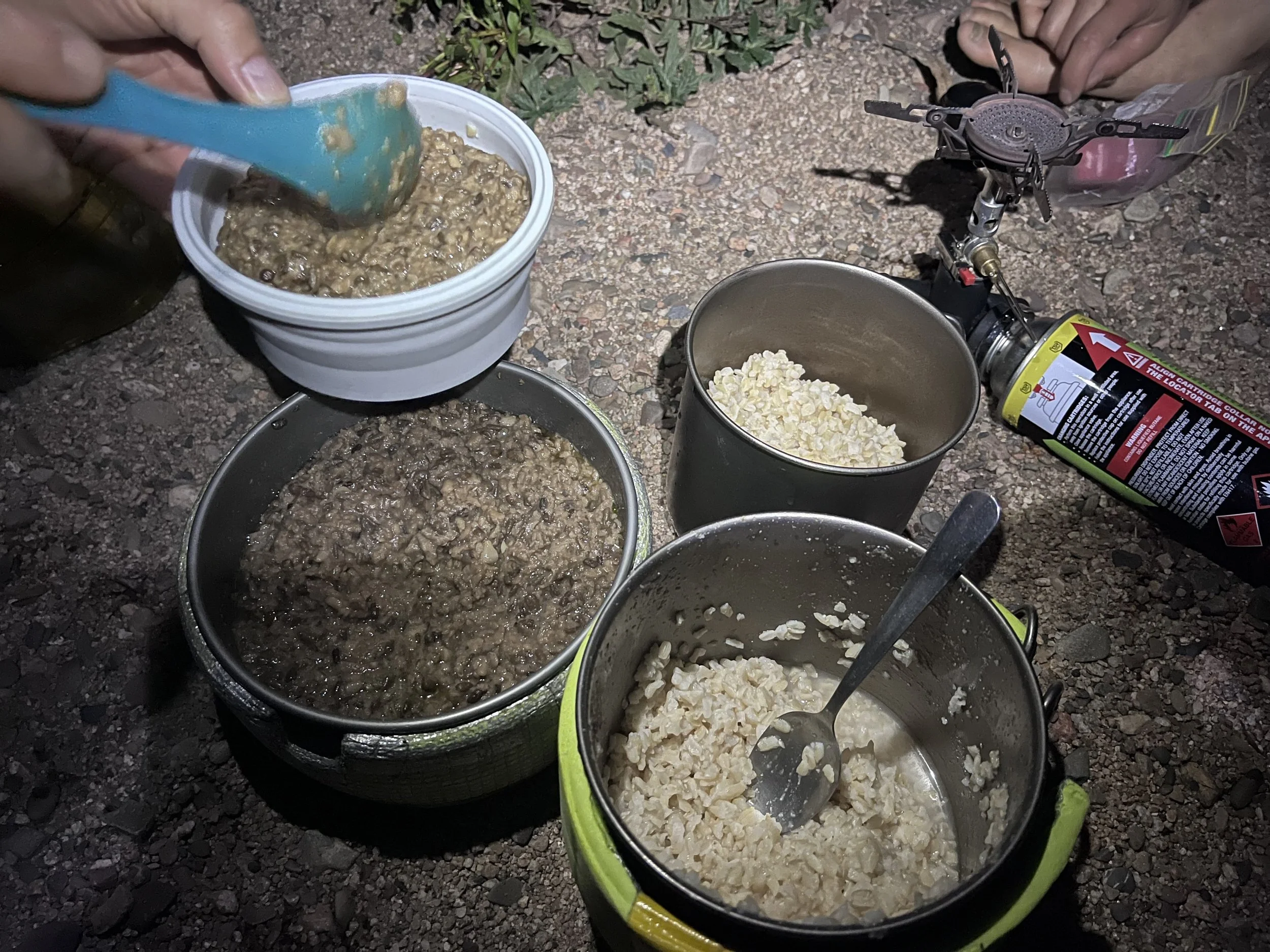
We had our own breakfast, lunch and snacks. We had a shared meal for dinner each night. Each person cooked 3 x group meals and it covered the whole trip. The weight wasn’t an issue and tin food worked well as it can dit into small spaces in side of the kayak without needing to waterproof it. I had my food in 3 × 5L dry bags, breakfast and snacks in one, lunch in one, and dinner in one.
Breakfast: oats, sultanas, cashews, milk powder, tea
Snacks: muesli bars, chocolate, milo
Lunch: wraps, cheese, falafel, tomato, beans, hummus
Dinner: miso ramen noodles, pasta, chilli con carne rice (we each cooked 3 meals for the group of 3)
Summary
The 9-day Snowy River kayaking expedition from the remote Byadbo Wilderness in New South Wales to Bete Belong above Orbost was one of the most challenging and rewarding adventures I’ve ever had. Over 213km, our group paddled loaded whitewater kayaks through wilderness, deep gorges, and powerful high flows that transformed the river into a serious undertaking.
The first two days alone involved moving only 20km and spending six exhausting hours portaging around Snowy Falls. Sitting on a small island that first night, nervous and overwhelmed by the unknown ahead — with 140km of unfamiliar river still to go — I had tears in my eyes wondering if we would even make it out of the Byadbo Wilderness. But gradually, as we adapted to the rhythm of river life and gained confidence in big water, everything began to change. We covered more distance, settled into life out of our kayaks, and experienced incredible moments along the river — stunning scenery, remote campsites, and wildlife including brumbies, deer, kangaroos, platypus, birdlife, and even an emu. What began as fear slowly transformed into one of the best adventures I’ve ever had, full of challenge, laughter, resilience, and the deep satisfaction of journeying through wild country under our own power. A huge thank you to Justine and Craig for sharing this unforgettable expedition with me.
“The rivers flow not past, but through us, thrilling, tingling, vibrating every fiber and cell of the substance of our bodies, making them glide and sing.” - John Muir